The schooner is the setting; the creative brief and shot list shape the plan. A fashion catalog photoshoot on a classic schooner can range from a focused designer-label shoot of 15-30 pieces to a large retail catalog with more than 100 garment pieces, and each calls for a different production footprint.
A mood board turns the desired look into practical choices, from color and styling to how the schooner appears in frame. Those choices shape the day’s logistics: garment count, change pace, crew, and equipment all affect the schedule and budget. Here, learn how to translate visual direction into production decisions, with examples and planning considerations for a fashion catalog photoshoot on a classic schooner. The result is a clearer plan that balances creative priorities with life aboard.
Key Takeaways
- Use a mood board to align the visual direction, styling, and shot list before production begins.
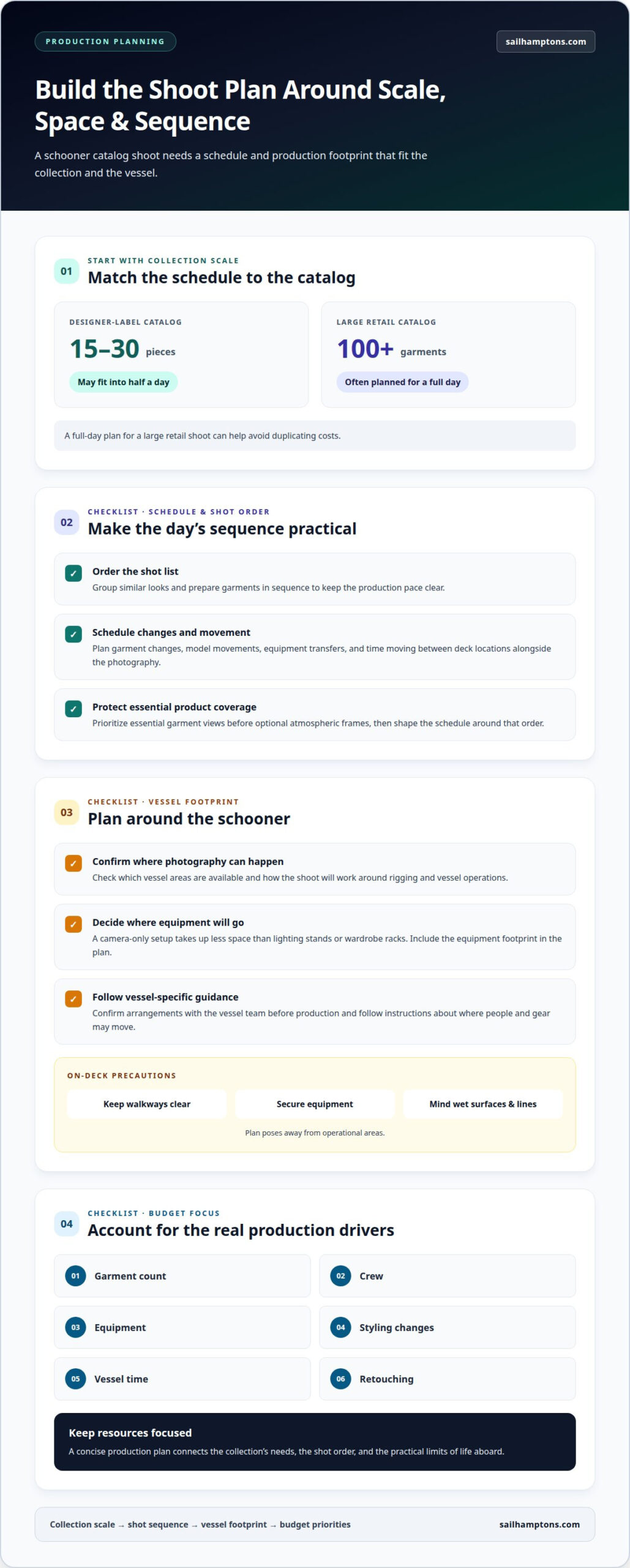
- Match the schedule to the catalog’s scale: a designer-label shoot may involve 15-30 pieces, while a large retail catalog can exceed 100 garments.
- Build permitting and insurance planning around the vessel, location, and production setup so logistical decisions are addressed early.
- Allow weather and changing light to inform the shoot plan, with flexibility to protect the desired look and keep production moving.
Concept development and mood boards
Campaign concepts for a classic schooner might pair resortwear with sails, linen with polished wood, or denim with open water. These are creative starting points, not claims about past campaigns. A fashion catalog photoshoot on a classic schooner can use references like these to create a distinct visual direction.
Build the mood board around the collection’s purpose, then translate the references into decisions. Choose images for silhouette, palette, texture, light, and pose. Note how each look could relate to schooner details such as deck lines, rigging, and varnished timber. Separate broad inspiration from approved styling so a reference image does not become an assumed shot requirement.
Color needs special attention in catalog work. A denim shoot may include 40 different tones of blue, making accurate color management essential. Include fabric references and intended color relationships in the board. During production, color charts can support consistency; calibrated monitors help retouching preserve the garments’ appearance.
Situation: A denim collection contains 40 blue tones that could look similar in changing light. Action: The creative team groups the looks by shade and adds fabric references to the mood board. Result: Styling and image review have a clear color target.
Situation: A reference suggests a dramatic pose near the rigging. Action: The team turns the idea into a practical shot-list note, specifying the garment, framing, and mood. Result: The photographer can explore the visual concept without treating the reference as a literal template.
Situation: A catalog needs atmosphere as well as clear product views. Action: The board separates editorial frames from straightforward garment images and flags looks that need close-up details. Result: The team can use the schooner’s character while still capturing useful product coverage.
Agree on the board before production, then use it to guide styling, shot order, and image selection. For a fashion catalog photoshoot on a classic schooner, a five-second on-set adjustment may prevent spending 20 minutes correcting a problem in Photoshop. If hundreds of images need management, the board also gives retouchers a consistent visual reference.
Shoot production and budgeting
Plan a fashion catalog photoshoot on a classic schooner around the collection’s scale and shot list. A designer-label catalog may fit into half a day, while a large retail shoot is often planned for a full day to avoid duplicating costs. Schedule garment changes, model movements, and equipment transfers alongside the photography.
For a schooner shoot, build the production plan around vessel-specific guidance. Confirm which areas are available for photography, where equipment can go, and how the shoot will work around rigging and vessel operations. A camera-only setup takes up less space than lighting stands or wardrobe racks.
A moving deck, wet surfaces, and lines underfoot call for practical precautions. Keep walkways clear, secure equipment, and plan poses away from operational areas. Follow the crew’s instructions about where people and gear may move. These steps help keep production organized without disrupting vessel operations.
Situation: A designer label needs polished images for a focused collection. Action: The producer groups similar looks, limits repeated setup changes, and reserves time for essential garment views. Result: The half-day schedule stays focused on the catalog’s required images.
Situation: A retailer plans a broad range of garments for a full-day shoot. Action: The team orders the shot list, prepares looks in sequence, and allows time to move between deck locations. Result: Production follows a clear pace with fewer avoidable resets.
Budget decisions for a fashion catalog photoshoot on a classic schooner depend on garment count, crew, equipment, styling changes, vessel time, and retouching. Prioritize essential product views over optional atmospheric frames, then shape the schedule around that order. A concise production plan keeps resources focused on the images the catalog needs.
For a schooner-centered production, a private sailing charter can provide the setting around which the shoot plan is built.
Permits and insurance required for a fashion shoot aboard a schooner
Permit requirements vary by location, so map each planned setting: the vessel, its dock, and any shoreline or public space in frame. Identify who controls each location and what permission they require for commercial photography. Permission to use the vessel does not automatically cover a separate dock or shoreline.
Describe the production clearly when requesting permission. Include its purpose, crew and model presence, equipment, intended locations, and whether the schooner will move. A small camera setup on deck raises different logistical questions from lighting stands, wardrobe racks, or a larger crew. A concise brief helps each responsible party assess the actual plan.
Discuss insurance before production with the vessel operator and the production team’s insurance representative. Ask what coverage documents are required, who must be named or covered, and whether the policy applies to the planned activity aboard the vessel. Requirements depend on the parties, location, and production arrangements, not simply the camera equipment.
Situation: A photographer plans deck portraits and dockside garment details. Action: The producer lists both settings and obtains permission from each relevant location controller. Result: The plan distinguishes vessel access from dock access.
Situation: The crew adds a lighting stand after the initial plan. Action: The producer updates the equipment description and shares it with the vessel operator and insurance representative. Result: Everyone can discuss the actual setup rather than rely on an outdated brief.
Keep a production file with written permissions, insurance documents, the approved shot plan, and operational instructions. Share the final version with the photographer, stylist, models, and crew before arrival. If the plan changes, such as adding a location or equipment, update the relevant parties before proceeding. This keeps permissions and coverage discussions aligned with the shoot as planned.
Best time of year and weather for a schooner photoshoot
Choose the season based on the collection’s styling, desired light, and vessel schedule. Spring can suit layered looks, summer lighter fabrics and sunlit deck scenes, and fall richer textures. These are creative considerations, not guarantees of weather. In Sag Harbor, plan around the conditions expected on the shoot date.
For each proposed date, compare the forecast with the shot list. Wind can lift hems and hair, shift loose styling, and complicate lighting. Cloud cover changes daylight, while rain can affect garments, equipment, and deck work. Decide which looks need calm conditions and which can work beneath a more atmospheric sky.
Set a weather decision point with the production team and vessel operator. Identify conditions that would change the plan, then prepare alternatives such as sheltered portraits, detail shots, or a revised sequence. Protect delicate fabrics and equipment, and leave room to move between exposed and sheltered areas as conditions change.
Situation: A linen collection depends on still, clean silhouettes. Action: The producer prioritizes sheltered compositions and schedules flowing-garment shots later. Result: The team can start with controlled product views before attempting wind-sensitive frames.
Situation: A campaign needs reflective water and warm evening light. Action: The photographer plans those frames around the day’s light, while the stylist prepares alternate looks for cloudier conditions. Result: The shot list has a visual backup while retaining the collection’s coastal mood.
Use the mood board to mark images that rely on direct sun, soft cloud, or wind movement. Align wardrobe, equipment, and sequence with those priorities. For a light-colored garment, for example, schedule a clean product view before dramatic backlit frames. If the forecast shifts, protect essential catalog shots first and adapt optional atmosphere frames.
Ready to plan a schooner setting around your seasonal concept? Plan your sailing charter as part of the production.
SailHamptons
SailHamptons can help you choose a sailing setting for a campaign shaped around coastal light, classic lines, and time on the water. For a private experience aboard a schooner, Luna Private Charter features Luna, a large Bermudian schooner. The right setting depends on your creative direction, shot sequence, and how you want the vessel to appear in the finished catalog.
Bring your concept, preferred look, and production priorities into the planning conversation. That gives the team useful context for discussing a sailing charter suited to your vision. If your plans call for a different vessel style, Cosmos Private Charter and Blue Sky Private Charter offer other private charter options.
For a conversation about a sailing setting for your shoot, contact SailHamptons.
Shape the next step for your campaign
A fashion catalog photoshoot on a classic schooner takes shape when the creative vision meets the right setting. First decide what the vessel should contribute to the images: a graceful backdrop, a sense of movement, or an intimate coastal atmosphere. That choice can guide the conversation about the sailing experience best suited to your concept.
SailHamptons offers Luna Private Charter, Cosmos Private Charter, and Public Sunset Sail. Each offers a different way to enjoy time on the water, so consider whether your plans call for a private charter setting or a sunset sail experience.
Bring your mood board and production priorities into the discussion, and let those details guide the next planning step. Contact SailHamptons about your shoot to explore a sailing setting for your campaign. Your vision can find its rhythm on the water.
Frequently Asked Questions
Where can you find classic schooner photoshoot locations in the United States?
Sag Harbor, New York, is one U.S. location to consider for schooner imagery. SailHamptons’ Luna is a large Bermudian schooner, giving a campaign a genuine sailing-vessel setting on the East End of Long Island. Build the location brief around the visual qualities you need, such as harbor views, open water, or the vessel’s traditional lines, then shape compositions around those surroundings.
Can you charter a schooner for commercial photography?
A charter can provide a vessel setting, while the photography production needs its own plan for access, equipment, and crew coordination. SailHamptons offers Luna Private Charter aboard Luna, its large Bermudian schooner. For commercial work, define the intended scenes and production footprint clearly so the charter arrangements and shoot plan can be considered together, rather than treating the vessel as an unstaffed studio.
How do you plan a fashion catalog shoot on a sailing schooner?
Sort the garments into image groups, such as full looks, detail views, and color-specific product shots. Assign each group a priority and note the model, styling, and framing required. Prepare a concise run sheet linking each look to its intended scene, then share it with the photographer, stylist, and vessel crew. This makes the sequence easier to follow aboard.
What crew, equipment, and space do you need for a schooner photoshoot?
Plan distinct roles for photography, styling, model support, and vessel operation. List every piece of equipment, including cases and stands, so its footprint is clear. A natural-light setup, for example, needs a different deck arrangement from larger lighting equipment. Keep the working area focused, and position wardrobe changes and gear so they do not interrupt vessel operations.
Examples of fashion campaigns photographed on classic schooners
Possible concepts include resortwear under sail, linen styled against polished wood, and denim framed by open water.