
Even a smooth-looking sail can unsettle your inner ear. If you’re wondering what to do if you get seasick in the Hamptons, look toward the horizon, move to a steady spot near the middle of the boat, avoid strong odors, and get fresh air. These steps may ease discomfort as your senses adjust to the boat’s motion.
Nausea or dizziness can quickly interrupt the pleasure of a day on the water, especially when your eyes and inner ears take in different signals. A little preparation can help you respond calmly and settle back into the sail. Here, you’ll learn why seasickness happens and how to choose a more stable position, keep your gaze on the horizon, and make fresh air and a low-odor setting part of your approach. The aim is a more comfortable journey, with the Hamptons coastline in view.
Key Takeaways
- Seasickness can happen when your eyes and inner ears register the boat’s motion differently; NOAA says recovery from seasickness has a 100 percent survival rate.
- When nausea begins, focus on the horizon or the direction the boat is moving rather than reading or looking closely at your phone.
- Choose a steady spot near the middle of the boat, and stay on deck to help your senses adjust to the motion.
- Move into fresh air and away from strong odors, which may aggravate discomfort.
1. Why does motion sickness happen?
Seasickness can start when your inner ear senses a boat’s motion while your eyes see a steadier scene. This mismatch can confuse the brain and cause dizziness, headache, cold sweats, nausea, or vomiting. Reading below deck is one example: your eyes focus on a still page while your inner ear registers each roll. Similar motion sickness can occur in a moving vehicle or on an amusement park ride. Knowing what to do if you get seasick in the Hamptons starts with recognizing early symptoms and responding before they intensify.
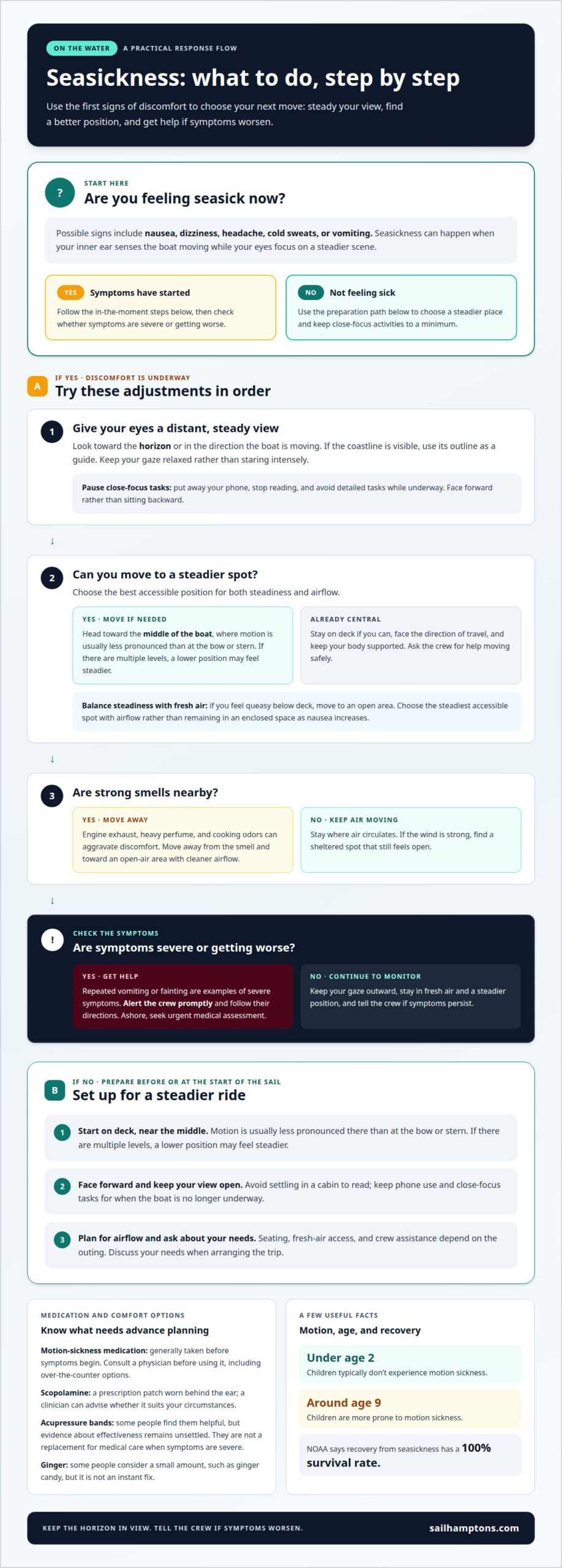
Age can also matter. Children under age 2 typically don’t experience motion sickness, while children around age 9 are more prone to it. According to the National Oceanic and Atmospheric Administration (NOAA), recovery from seasickness has a 100 percent survival rate. Acupressure motion sickness bands apply pressure to the wrist; some people find them helpful, but evidence about their effectiveness remains unsettled. Treat a band as a possible comfort measure, not a replacement for medical care when symptoms are severe.
Choose a spot near the middle of the boat, where motion is usually less pronounced than at the bow or stern. A forward area of the cockpit near the center may also be a good option. If there are multiple levels, a lower position may feel steadier than an upper one. These choices can reduce how much motion you sense, though they can’t prevent every episode.
Feeling seasick does not automatically mean you are entitled to a refund or ticket change. The ticket terms determine those options. If someone vomits or becomes severely seasick, alert the crew promptly and follow their directions. Knowing what to do if you get seasick in the Hamptons also means recognizing when symptoms are worsening.
Seek urgent medical care for severe or worsening symptoms, such as repeated vomiting or fainting. On a boat, notify the crew so they can help arrange an appropriate response. Ashore, seek urgent medical assessment. Seating, fresh-air access, and crew assistance depend on the outing, so discuss your needs when arranging your trip.
2. Focusing on the horizon
Once aboard, give your eyes a steady point to follow. Look toward the horizon or in the direction the boat is moving, rather than watching nearby waves. A distant, stable view can help counter the conflicting signals your senses receive as the vessel moves. Keep your gaze relaxed; there’s no need to stare intensely at one point. If the coastline is visible, use its outline as a guide.
Close-focus activities can make the mismatch more noticeable. Put away your phone, pause reading, and avoid detailed tasks while the boat is underway. A screen or book stays still in your hands even as your inner ear registers motion. Looking down to scroll, read a message, or study a map may make nausea or a headache harder to manage. Face forward rather than sitting backward, and return your attention to the horizon if discomfort builds.
What are the fastest ways to relieve seasickness on a boat? Stop reading or using your phone, face the direction of travel, and focus on the horizon. Move into fresh air if possible, and tell the crew if symptoms persist. These steps can be tried right away. Medication is generally taken before symptoms begin. Consult a physician before using motion-sickness medication, including over-the-counter options, because products and personal circumstances differ.
Ginger is another option some people consider, but it isn’t an instant fix. Choose a small amount, such as ginger candy, and keep your gaze directed outward instead of returning to a screen. If you’re planning a coastal outing, a tailored Hamptons sailing experience can make the open-water setting part of the occasion. On board, the horizon offers a simple visual reference: keep it in view, and let close-focus tasks wait until you’re ashore.
3. Choosing a stable position on the boat
At the start of a sail, stay on deck and give your body time to adjust to the vessel’s movement. Choose a spot near the middle, where motion is generally less pronounced than at the bow or stern. If the boat has multiple levels, favor a lower position. A seat near the center may mean fewer sharp changes in motion, helping limit the conflicting signals associated with nausea. Face forward and settle in before discomfort builds.
Fresh air matters, too. If you feel queasy below deck, move to an open area where air circulates and you can see your surroundings. The upper deck may offer more fresh air, while a lower, central position usually means less movement. Balance these needs by choosing the steadiest accessible spot with airflow, rather than staying in an enclosed space as nausea increases. Tell the crew if you need help moving safely.
Plan where to sit before the boat departs. Start on deck, avoid settling in a cabin to read, and move toward the center if the bow or stern feels unsettled. Keep your body supported and face the boat’s direction of travel. These practical adjustments may reduce the motion your body registers, but they won’t stop the boat from moving.
Positioning can help with discomfort, but it is not a substitute for medical advice. If you’ve had severe motion sickness before, discuss prevention with a physician before sailing. Scopolamine is available as a prescription patch worn behind the ear; a clinician can advise whether it suits your circumstances. Don’t wait until nausea is intense to consider your options. On board, alert the crew promptly if symptoms worsen, and move to fresh air and a steadier central area.
4. Avoiding odors and getting fresh air
Strong smells can aggravate seasickness, so notice what’s around you when symptoms begin. Engine exhaust, heavy perfume, and cooking odors are common triggers. Move away from them and into an open-air area where you can feel the breeze. If food is being prepared nearby, choose a spot with cleaner airflow. Avoid leaning near exhaust or lingering beside strong fragrances to limit exposure to smells that may intensify nausea.
Fresh air is another reason to leave an enclosed cabin if you feel unwell. Move onto the deck, where air circulates. If the wind is strong, find a sheltered spot that still feels open, and ask the crew for help moving safely. Stay there while symptoms settle rather than returning immediately to an enclosed space. Keep water nearby and take small sips if you feel able to drink.
Simple remedies may complement a change of air. Some sailors find ginger, peppermint tea, or ginger ale soothing when queasiness starts. Crackers or another plain snack may be easier to tolerate than rich food. Avoid strong-smelling meals, alcohol, or coffee if they worsen your discomfort. These are comfort measures, not substitutes for medical care when symptoms are severe.
Medication is a separate consideration. Over-the-counter Dramamine helps some people, but it can cause drowsiness; effects vary by person. A prescription option may be appropriate for some travelers, while medication choice depends on health circumstances and other medicines. Speak with a physician before taking motion-sickness medication, including nonprescription products. If nausea worsens or vomiting continues, tell the crew instead of managing alone. For a fresh-air setting on the water, plan a Hamptons sailing outing and enjoy the coastline from the deck.
SailHamptons
SailHamptons offers private sailing and yacht charters, along with the Public Sunset Sail, for guests planning time on the water. If you’re prone to seasickness, the practical steps above can help you prepare: consider your seating preferences, keep the horizon in view, and limit exposure to strong odors. For a private outing, Luna Private Charter, Cosmos Private Charter, and Blue Sky Private Charter provide distinct ways to experience the Hamptons coast. Choose the format that suits your plans, and raise comfort preferences as you plan your sail. The aim is to set out with a thoughtful approach, not to promise that seasickness can be prevented. Contact SailHamptons to discuss your sailing plans.
Set Out With Confidence
A day on the water can feel more inviting when you plan with comfort in mind. Before choosing an outing from Sag Harbor, consider what helps you feel settled while traveling and share relevant preferences as you make arrangements. This can help you set clear expectations and focus on enjoying the coastline.
Knowing what to do if you get seasick in the Hamptons is useful preparation, but it doesn’t have to define your time at sea. Adjust your plans if needed, speak up if you begin to feel unwell, and focus on enjoying the experience at your own pace. Being present is more important than pushing through discomfort.
Ready to plan a Hamptons day on the water? Contact SailHamptons to plan your trip, and take the next step toward a relaxed coastal escape.
Frequently Asked Questions
What is seasickness, and why do people get seasick?
Seasickness is motion sickness that occurs during boat travel. It can cause nausea, dizziness, headache, cold sweats, or vomiting. The body may receive mismatched information: the inner ear senses the vessel moving while the eyes focus on a relatively steady view. Similar symptoms can occur during car rides or amusement park rides, so boats aren’t the only setting that can trigger motion sickness.
Does it help to take medicine before you start traveling?
Yes, motion-sickness medication is generally most useful before symptoms begin. Many products recommend taking them at least one hour before travel, but follow the specific label and ask a physician or pharmacist about timing. This is especially important if you take other medicines or have a health condition, since effects and suitability can differ from person to person.
Why does motion sickness happen?
Motion sickness happens when the brain receives sensory signals that don’t align, such as movement sensed by the inner ear but not clearly seen by the eyes. A car passenger reading as the vehicle turns is one example; a boat passenger watching a still screen as the vessel moves is another. The resulting discomfort can include nausea, dizziness, headache, and vomiting.
How can you prevent seasickness before a boat trip?
Before boarding, prioritize rest, drink water, and choose a light, simple meal rather than rich or greasy food. Avoid alcohol before the trip, and bring any medication you’ve discussed with a health professional so you can follow its directions. If you’ve experienced severe motion sickness during past travel, plan your approach before departure rather than waiting for symptoms to start.
Which over-the-counter seasickness medicines work, and what are their side effects?
Dramamine and Bonine are over-the-counter options used for motion sickness; Benadryl is another medicine sometimes mentioned for this purpose. Possible side effects include drowsiness, dry mouth, and blurred vision, and effects vary among people. Read the product label and consult a physician or pharmacist before use, particularly if you take other medicines or need to stay alert.
Are seasickness medicines safe for children, pregnant people, or older adults?
Whether a motion-sickness medicine is suitable depends on the person, the product, and individual health circumstances. Children, pregnant people, and older adults should ask a physician or pharmacist before taking motion-sickness medicine, including over-the-counter products. Share the person’s age, pregnancy status, current medicines, and relevant health conditions so the professional can advise on an appropriate option and its directions.