
Stillness can feel different when the water is gently in motion. In a guided meditation and sound bath on a boat, you can settle comfortably while a practitioner offers spoken guidance and plays resonant instruments such as crystal bowls and chimes. The boat’s movement and the surrounding coastal sounds become part of the setting.
It’s natural to wonder whether you need meditation experience or special preparation. You don’t: beginners can focus on getting comfortable, listening, and following the guidance at their own pace. This article explains what a session may feel like, how to prepare, which instruments you might hear, and how timing and floating can shape the experience. You’ll also find practical considerations for dressing comfortably and settling in, so your first sound bath on the water feels calm, personal, and easy to enjoy.
Key Takeaways
- Get a sense of how spoken guidance, crystal bowls, chimes, and gentle movement can shape a floating sound bath.
- Learn what to consider when exploring boat sound bath experiences in different cities and waterways.
- Prepare for time on the water with practical comfort and safety considerations, including the possibility of getting wet.
- Explore how motion sensitivity and sound preferences can influence your comfort, and what to consider before attending.
Benefits of a floating sound bath
Compared with a land-based sound bath, a boat session adds gentle motion, open-water views, and changing outdoor sounds. The core practice is familiar: listeners settle on mats while a practitioner plays instruments such as crystal bowls and chimes.
The setting gives your attention more than one place to rest. You might notice a bowl’s lingering tone, then the water’s movement or a passing breeze. This shifting soundscape can feel distinct from a quiet indoor room, where walls and still surroundings frame the experience. The boat’s movement also becomes part of the practice: rather than trying to control every sensation, notice it and return your focus to the next sound or spoken cue.
For a beginner, the structure makes participation simple. Get comfortable on your mat, listen to the practitioner’s guidance, and let each instrument mark a moment of attention. Crystal bowls may create sustained tones, while chimes offer shorter, clearer notes. You don’t need to know their names or meanings. Listening is enough. If your mind wanders, use the next sound as a gentle cue to refocus.
- A change of setting: Open water replaces the familiar boundaries of a studio, with views and ambient sounds contributing to the atmosphere.
- A sensory anchor: A bowl’s sustained tone or a chime’s brief note gives you a specific sound to follow.
- A moving environment: The boat’s motion can be noticed alongside the music, adding a distinct element to the session.
Neither setting is inherently better. A land-based session offers a stationary environment; a floating session adds motion and an outdoor backdrop. Choose the surroundings where you feel comfortable enough to listen. Someone drawn to coastal views may enjoy the boat’s changing scene, while someone who prefers stillness may find a studio more familiar. In either setting, the central experience is listening to the instruments and following the meditation at your own pace.
What cities and waterways offer boat sound bath experiences?
Sag Harbor, on Long Island’s East End, is the location to consider for a coastal boat sound bath. The right setting depends less on a city name than on the waterway and the session’s format. A harbor, sheltered inlet, or open-water route can each create a different backdrop, with local conditions shaping how still or lively the experience feels. Choose the kind of setting you’d enjoy, then consider how comfortable you are with a moving boat.
In Sag Harbor, a session near the shoreline can pair meditation with coastal views, while a route farther from shore may make the water feel more expansive. These are possibilities, not a guarantee of a particular route. A sound bath needs room for participants to settle and hear the instruments, so the boat’s layout and surrounding activity matter alongside the scenery. A quieter setting can make it easier to focus on the practitioner’s guidance and each note.
Use these practical steps to think about location:
- Start with the water: Decide whether a sheltered harbor or a more open setting feels more comfortable.
- Consider the surroundings: Shoreline views, passing boats, and ambient sounds can shape the atmosphere.
- Match the setting to your aim: A calm, inward-focused session may suit a quieter backdrop; a scenic outing may make the landscape part of your attention.
Not every city or waterway is equally suited to this format. The boat needs a suitable place to settle, and the setting should support both listening and comfort. In Sag Harbor, the coastal character offers a distinctive context for time on the water. For a related way to experience a guided practice afloat, explore a coastal yoga experience. Consider the location as part of the meditation itself: the water, horizon, and surrounding sounds all help define what the session feels like.
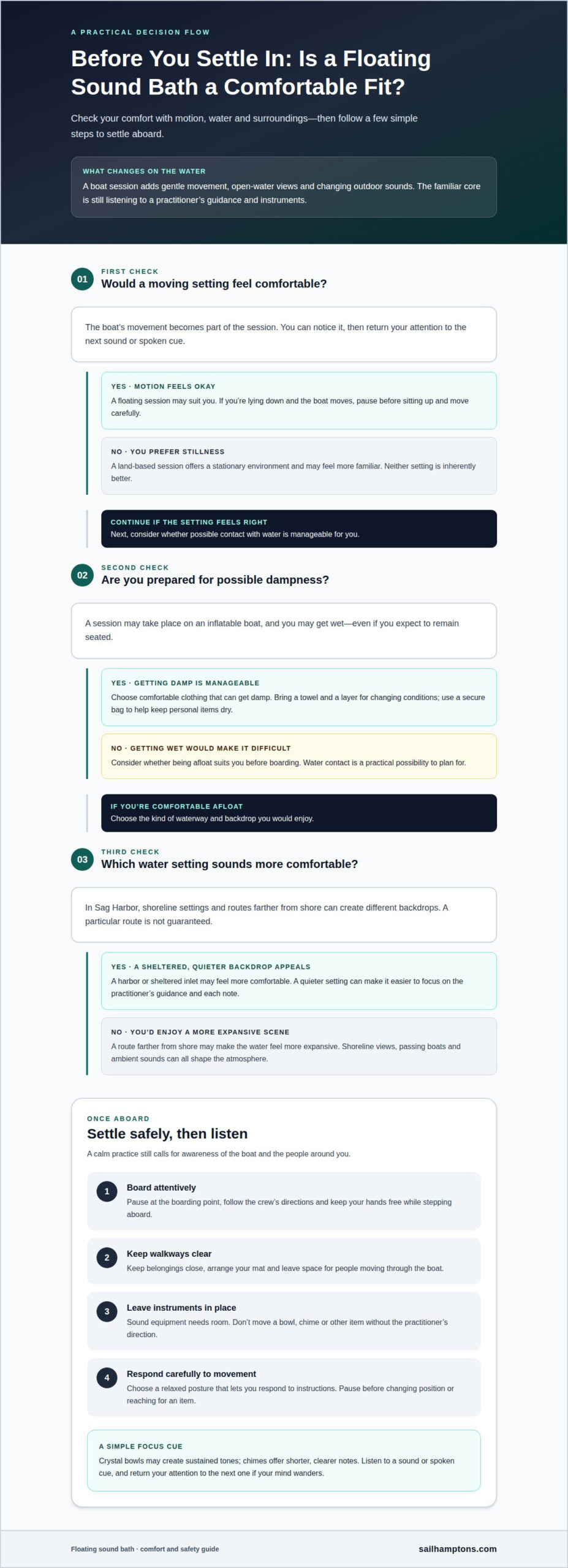
What safety rules apply during a meditation or sound bath on a boat?
A floating sound bath may take place on an inflatable boat, where participants may get wet. Plan for contact with water, even if you expect to remain seated throughout the session. Choose clothing that stays comfortable when damp, and bring a layer for changing conditions. A towel and a secure bag can help keep personal items dry between the dock and your place aboard.
Before settling onto a mat, pause at the boarding point and follow the crew’s directions. Keep your hands free while stepping aboard, and take care with bags, shoes, and instruments around the walkway. Once seated, leave clear space for people moving through the boat. Sound bath equipment needs room too, so don’t move a bowl, chime, or other item without the practitioner’s direction.
- Dress for water: Choose comfortable clothing that can get damp, and bring a towel or spare layer.
- Board attentively: Follow the crew’s instructions and keep belongings close rather than across a walkway.
- Settle securely: Arrange your mat and personal items so they won’t obstruct movement or the instruments.
- Stay aware: Notice the boat’s movement, and pause before changing position or reaching for an item.
During meditation, choose a relaxed posture that still lets you respond to instructions. If the boat moves while you’re lying down, pause before sitting up and move carefully rather than shifting suddenly. Follow the practitioner’s guidance when the session begins, and listen for directions from the crew. A calming practice doesn’t mean ignoring what’s happening around you.
Think about comfort before boarding. If getting wet would make the experience difficult, or you’re uneasy on an inflatable boat, consider whether this setting suits you. The sound bath’s quiet pace and the practical realities of being afloat go together: preparation helps you focus on the instruments without overlooking the boat itself.
Can people with motion sickness or sound sensitivity attend a boat sound bath?
They can consider attending, but a moving boat and resonant instruments may not suit everyone. The inflatable boat used for a floating sound bath can move beneath you, while bowls and chimes create sustained or distinct tones. Think about which sensation is more challenging: motion, sound, or both.
If boat movement concerns you, notice how you feel on the water before settling into meditation. Staying seated upright and keeping your eyes open can help you remain aware of your surroundings. If you can see the shoreline, you might rest your gaze there instead of closing your eyes. Follow crew directions, and change position slowly if you need to adjust.
Sound sensitivity calls for a different kind of preparation. Crystal bowls can ring for several moments, and chimes may sound bright against a quiet backdrop. If the arrangement allows, listen from a comfortable distance, or use earplugs that reduce intensity while still letting you hear spoken guidance. If a tone feels overwhelming, open your eyes and pause the meditation rather than pushing through discomfort.
- Consider motion: Decide whether gentle movement on an inflatable boat feels manageable for you.
- Plan your listening: Think about whether sustained bowl tones or sharper chime notes are comfortable.
- Keep options open: Remain seated, adjust your gaze, or take a quiet pause if you need one.
A sound bath is a listening experience, not a test of endurance. You don’t have to close your eyes or maintain one posture throughout. For example, a beginner can follow the spoken guidance while sitting upright, then recline only if that feels comfortable. If motion sickness or sound sensitivity is severe, or a health condition affects your response, get individual medical advice before choosing a boat-based session. Personal comfort matters more than completing every part of the practice.
If you’d prefer to begin with time on the water without making a sound bath the focus, explore coastal sailing options.
SailHamptons
SailHamptons offers a way to enjoy the coastal setting through a sailing experience, whether you’re seeking a private outing or a shared sunset sail. Its Luna Private Charter, Cosmos Private Charter, Public Sunset Sail, and Blue Sky Private Charter provide different ways to spend time on the water. Consider these options when the scenery and feeling of being afloat appeal, even if a dedicated sound bath isn’t the focus.
For a guided practice on the water, think about the setting, your comfort with motion, and the sounds you enjoy. These details can help shape the kind of experience you’re looking for. If you’d like to explore a coastal charter, contact SailHamptons.
Make Space for a More Mindful Day on the Water
Your first guided meditation and sound bath on a boat doesn’t need to feel like a performance. Treat it as a chance to notice what helps you settle: the rhythm of the water, a particular tone, or simply a comfortable place to rest. Take part at your own pace, keeping your eyes open or adjusting your posture as needed.
As you consider your next step, think about the kind of time afloat you’d enjoy most. A quiet, reflective outing and a scenic sail offer different moods, so choose the experience that feels right for you. SailHamptons can help you plan a coastal outing from Sag Harbor that suits your plans and preferred pace.
Contact SailHamptons to plan your time on the water, and take the first step toward a day shaped around the coast and your own sense of calm.
Frequently Asked Questions
What should participants expect during a typical sound bath guided meditation session?
A typical session combines spoken guidance with live instrument sounds while participants rest comfortably. In a guided meditation and sound bath on a boat, you may begin by settling on a mat, then follow the practitioner’s prompts as crystal bowls or chimes ring. You can listen without knowing anything about the instruments and follow the guidance at a pace that feels comfortable.
Why experience a floating sound bath?
A floating session brings the water and coastal surroundings into the experience. The horizon, breeze, and movement beneath the boat create a setting unlike an indoor studio. You might notice a tone, then the sound of water nearby. That combination can make the setting itself a focus for attention, alongside the meditation and instruments.
Where can I book a guided meditation and sound bath on a boat in the United States?
For an on-water wellness outing in the United States, Sag Harbor, New York, is a local option: SailHamptons offers Yoga on the Water. All SailHamptons charters booked for more than six-passengers are held aboard US Coast Guard Inspected ‘Small Passenger Vessels’ that are certified for capacity and always provided with professional trained crew. Every SailHamptons vessel is always fully-insured for its full capacity.
What does a boat sound bath and guided meditation experience include?
The experience may include a comfortable place to rest, a practitioner’s spoken guidance, and instruments such as crystal bowls and chimes. The arrangement can vary: one session might emphasize longer bowl tones, while another includes brief chime notes between prompts. The practitioner leads the meditation, so participants can focus on listening rather than learning a sequence or performing specific movements.
How long do boat meditation and sound bath sessions last?
Session length depends on the event’s schedule and format. For planning, distinguish the listening and meditation portion from the full outing: boarding, settling into place, and leaving the boat all take time. Use the event’s stated start and finish when arranging transportation, and leave time around those hours rather than assuming the sound portion matches the total time afloat.
What should I bring and wear to a boat sound bath?
Wear comfortable clothes that let you sit or lie down easily, and bring a yoga mat or blanket if the session calls for one. An extra light layer can be useful outdoors, where breezes may change how warm you feel. Keep belongings compact and easy to carry aboard. Participants on an inflatable boat may get wet, so plan accordingly.