A yacht offers a striking backdrop for a second wedding: open water, the Hamptons shoreline, and the vessel itself. But deck space for photographs may be limited, so planning a second wedding on a boat in the Hamptons can work best when first-look or bridal-party portraits happen ashore before boarding. This lets the setting shape the celebration without requiring every photo to happen on deck.
An all-inclusive package can simplify planning by bringing together catering, bar service, cake, linens, china, and flatware. Before choosing one, find out what affects the total cost, how catering and ceremony spaces work onboard, when payments are due, and whether décor or timing restrictions could affect the day. Comparing written inclusions helps you plan a celebration that feels personal, relaxed, and at home on the water.
Key Takeaways
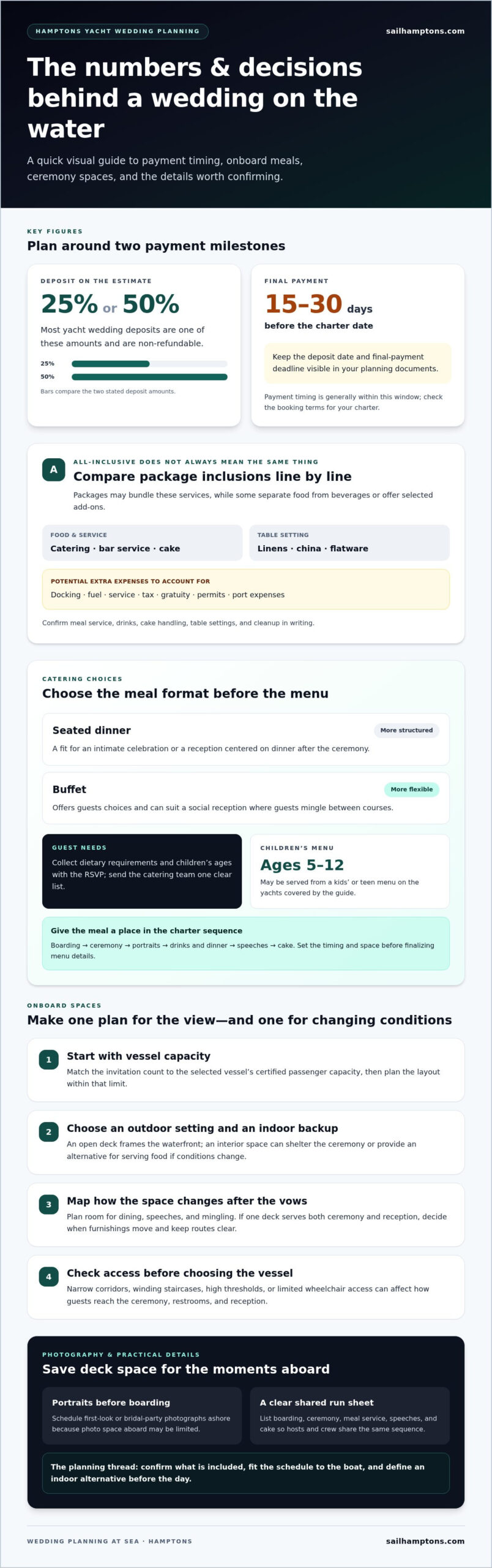
- Plan portraits around the yacht’s limited photo space, with first-look or bridal-party pictures taken ashore before boarding.
- Shape catering and onboard service around the celebration you want, and account for guest needs when planning the menu.
- Build the ceremony and reception plan around the boat’s interior and exterior spaces, including a weather-ready backup.
- Budget for a deposit that may be 25% or 50% of the estimate, with final payment generally due 15 to 30 days before the charter.
- Compare what an all-inclusive package actually covers, and factor in possible docking, fuel, service, tax, gratuity, permit, and port expenses.
1. Is catering handled onboard for a second marriage wedding?
Onboard catering can make the meal part of the charter rather than a separate reception stop. SailHamptons offers customizable catering and onboard food experiences. The service style shapes the day: a seated dinner needs a different arrangement from a relaxed buffet. Choose the experience that suits your guests before settling on menu details.
Start with the guest list and meal format. A buffet gives guests choices and can suit a social reception, while a seated meal creates a more structured dinner. Exploring curated options from providers like Exquisite Catering can offer useful inspiration for balancing gourmet courses with seamless presentation. For an intimate celebration, you might plan dinner after the ceremony. A larger, informal gathering may suit a buffet that lets guests mingle between courses.
Next, fit the meal into the charter schedule. A ceremony, portraits, drinks, and dinner all need time and space onboard. Set the meal’s place in the sequence before finalizing the menu. If guests will eat soon after boarding, choose a format that can begin smoothly. If the reception includes speeches, leave a natural pause for them before the main course.
Guest needs deserve the same attention as presentation. Collect dietary requirements and children’s ages with the RSVP, then give the catering team one clear list. Children aged 5 to 12 may be served from a kids’ or teen menu on the yachts covered by this guide. For example, note vegetarian meals and allergies separately from general preferences, so those needs aren’t lost in the headcount.
Clarify in writing what “catering included” means. Some wedding packages bundle catering with bar service, cake, linens, china, and flatware; others separate food from beverages or offer selected add-ons. Compare the details line by line, including meal service, drinks, cake handling, table settings, and cleanup. This helps prevent assumptions about what guests will receive.
For an outdoor reception, consider how wind and changing conditions could affect service. An interior space can provide an alternative for serving food if guests move indoors. Keep the menu and room arrangement workable in either setting. A simple run sheet listing boarding, ceremony, meal service, speeches, and cake gives hosts and crew a shared sequence to follow.
Before the charter, send the final guest count, menu selections, and dietary notes together in one organized update. This gives the catering plan a clear foundation, whether the celebration centers on a leisurely dinner or a breezy buffet. Clear choices make onboard service easier to coordinate and leave the couple free to enjoy their guests.
2. Onboard ceremony and reception spaces
Hamptons wedding boats have different passenger limits. Match your invitation count to the selected vessel’s certified capacity, then plan the ceremony and reception within that limit. A boat that accommodates everyone still needs a workable layout for guests, the couple, and ceremony participants.
Begin by choosing the ceremony setting. An outdoor deck can frame the waterfront and sunset, while an interior space offers shelter if conditions change. Decide where the couple will stand and where guests will gather. For example, seat guests with a clear aisle or leave an open area for a short standing ceremony.
Next, picture how the space will change after the vows. A reception may need room for dining, speeches, and mingling, while the ceremony needs an unobstructed view. Map those moments in order. If the same deck serves both purposes, plan when chairs or other furnishings will move and keep a clear route between the ceremony and reception areas.
Accessibility also shapes the guest experience. Boats may have narrow corridors, winding staircases, high door thresholds, or limited wheelchair access. Consider how guests will reach the ceremony area, restrooms, and reception space. If a guest uses a mobility aid, identify potential barriers when selecting a vessel and choose a layout that minimizes unnecessary movement.
Include an interior backup in the plan, even if an open-air ceremony is your first choice. If weather makes the deck unsuitable, the couple and guests need a defined indoor location. Decide what will move inside, including ceremony seating and reception arrangements. A simple layout plan can make the transition feel deliberate rather than improvised.
Include photography in the floor plan. Space for photos aboard may be limited, so schedule first-look or bridal-party portraits at a separate location before boarding. That leaves the boat’s best vantage points available for the ceremony and shared guest moments. For a sunset setting, plan portraits around the light and keep gathering areas clear.
Before settling on a layout, sketch the ceremony, seating, and reception flow, then compare it with the vessel’s actual spaces. This makes trade-offs visible early, especially for a private celebration balancing open-air views with an indoor weather plan. Explore private charter options as you consider the setting and guest experience you want aboard.
Guest capacity varies by vessel, so the number depends on the boat’s safe passenger limit.
3. Yacht wedding deposits and payment timing
Most yacht wedding deposits are 25% or 50% of the estimate total, and they’re non-refundable. Payment is generally due 15 to 30 days before the charter date. Treat both dates as key planning milestones: the deposit secures the booking, while the later payment deadline arrives as guest and event details take shape.
Before paying, read the estimate alongside the booking terms. Make sure the quoted total and deposit calculation are based on the same estimate, and note the payment deadline. Keep a copy of the agreement and payment records with your wedding documents. This makes it easier to track payments and see which planning decisions may affect the final balance.
Separate the boat’s role from the wedding format you want. A charter may cruise during the celebration or remain docked, and that choice changes the experience. A moving cruise offers a changing waterfront backdrop; a docked event keeps the setting still for dinner and conversation. Decide which matters most before comparing vessel options.
Choose a charter suited to weddings or vow renewals, then compare the vessel, passenger capacity, onboard spaces, and whether the experience is private or shared. A vow renewal and a legal wedding involve different plans, so clarify which ceremony you’re arranging before settling the booking details.
For permits, licenses, and officiant requirements in New York, distinguish a legal marriage ceremony from a symbolic vow renewal. The applicable paperwork and officiant rules depend on that distinction, so include the ceremony’s legal status in your planning rather than assuming the boat charter covers it.
Departure points and cruise routes depend on the charter’s marina and planned itinerary. In Sag Harbor, choose a departure location with guest transportation in mind, then establish whether the boat will follow a set route or stay docked. That decision shapes arrival timing, waterfront views, and the schedule for the ceremony and dinner.
As you compare boats, consider how each one supports the celebration, not just how it looks. A striking vessel can create an intimate setting, but the passenger limit, layout, and route must suit your plans. Write down your priorities first, such as a private charter, an outdoor ceremony, or room for a seated dinner. Use them to narrow the options.
Build a payment calendar around the deposit and the due date, with reminders for each milestone. Keep the estimate, signed agreement, and payment confirmations together. This gives you a clear record as the wedding takes shape and lets you focus on the moment you’ll celebrate aboard.
4. Boat décor and rental restrictions
Hamptons boat charters may restrict décor and departure times, and late-arriving guests can miss the boat. Catering, alcohol, and music arrangements depend on the charter terms and package. Treat each as a planning item, not an assumed inclusion, before choosing reception details.
Choose restrained décor that complements the coastal setting. Low floral arrangements, a small welcome sign, and coordinated table details can create a polished look without bulky installations. Keep decks and walkways clear for boarding and movement. A few intentional touches can feel more elegant than a crowded layout.
Include setup and removal details in the event plan. A freestanding sign or table arrangement is easier to position than a fixture that needs installation. Make the setup list specific: name each item, identify its location, and say who will remove it. This gives the couple and setup team the same plan before guests arrive.
Build the schedule around the vessel’s departure time. Send guests the boarding time and dock location clearly, and ask them to arrive early enough for a relaxed welcome. A cocktail hour can begin aboard after boarding, but it cannot replace the time needed to get everyone on the boat. A named arrival contact and concise reminder can reduce confusion at the waterfront.
For catering and beverages, compare the options with the reception you’re planning. SailHamptons offers customizable catering and beverage add-ons. List what the celebration needs, such as dinner service, drinks, or a toast, then match each element to the arrangements. This helps you avoid planning around a service that isn’t included.
Include music in the event plan. Choose a format that suits the reception, such as a curated playlist for a relaxed dinner or music for a livelier celebration. Discuss the desired sound and timing as part of the charter arrangements rather than assuming every setup will work onboard. Keep the ceremony, cocktail period, and dinner in a clear sequence so music supports each moment.
Getting married on a boat means planning around a moving venue and its schedule. Keep a short written plan covering décor, catering, beverages, music, boarding, and departure. For example, assign one person to bring the sign and table details while another manages guest arrivals. Clear roles help maintain a relaxed, polished atmosphere without crowding the deck.
5. All-inclusive boat wedding packages
An all-inclusive package can bring key reception elements together aboard one wedding venue. Some boat wedding packages include catering, bar service, cake, linens, china, and flatware. That combination can simplify hosting, but “all-inclusive” doesn’t mean every event cost is covered. Compare the written inclusions with your plans before deciding what the package delivers.
For couples planning a second wedding on a boat in the Hamptons, start with a checklist of the celebration’s essentials: ceremony, dinner, drinks, cake, table settings, and service needs. Mark each item as included, optional, or an additional charge. A package listing catering and linens, for example, may treat beverages or cake separately.
Review costs outside the package inclusions, too. A wedding budget may need to account for docking, fuel, service fees, taxes, gratuities, permits, and port expenses. These costs depend on the charter arrangement and event details. Keep them visible in your comparison instead of treating the package total as the full event budget.
Guest count also affects whether a package fits. The vessel’s certified passenger limit determines how many people can come aboard, while attendance shapes food, drinks, and table settings. A package suited to an intimate dinner may not work for a larger reception. Match your expected attendance to both the boat’s capacity and the services included.
Consider how each package supports the moments you value most. You might prioritize an easy transition from an intimate ceremony to dinner, or prefer a cocktail reception and time to enjoy the waterfront. Choose inclusions that support your preferred flow rather than focusing only on the longest list of services.
A useful step in planning a second wedding on a boat in the Hamptons is to compare packages in a simple worksheet. Record included services, possible extra charges, passenger capacity, and how catering and beverages fit the schedule. Add practical details such as cake service and table settings. This makes it easier to weigh convenience and customization without assuming every package uses “all-inclusive” the same way.
A thoughtfully selected package can keep hosting elegant without making the celebration feel overproduced. Focus on what matters to you, then decide which details will make the moment feel personal. If an onboard celebration suits your plans, explore wedding charter options as you shape the experience.
SailHamptons: Luna Private Charter
SailHamptons offers private yacht charters for couples envisioning a wedding celebration on the water. The Luna Private Charter features a large Bermudian schooner, bringing classic sailing character to a gathering framed by the Hamptons coastline. For a different atmosphere, Cosmos Private Charter offers a mahogany performance trimaran, while Blue Sky Private Charter features a classic lobster yacht.
Consider these private charter options when you’re ready to turn your guest list, preferred setting, and event plans into a specific onboard experience. The vessel’s character can help guide decisions about ceremony atmosphere, reception flow, and the backdrop you want for photographs. SailHamptons also offers a Public Sunset Sail for those considering a shared sailing experience rather than a private event.
To explore the Luna Private Charter for your celebration, contact SailHamptons or visit sailhamptons.com.
Shape a Celebration That Feels Like Yours
Planning a second wedding on a boat in the Hamptons can begin with one simple choice: decide how you want the day to feel. Perhaps you picture an intimate exchange framed by open water, a relaxed gathering with loved ones, or a sunset sail to mark the occasion. Let that feeling guide the details, from the guest experience to the vessel that suits your plans.
SailHamptons offers Luna Private Charter and Cosmos Private Charter for private outings, as well as its Public Sunset Sail. Each offers a different way to enjoy the water, so consider which setting feels right for your celebration. Then contact SailHamptons to discuss your plans and the experience you want to create.
Contact SailHamptons to discuss your wedding, and begin shaping a day that feels personal, graceful, and entirely your own.
Frequently Asked Questions
Are there good photo backdrops on the yacht?
Yes. A yacht can frame the couple against open water, the shoreline, or the vessel itself. Around Sag Harbor, the waterfront gives portraits a distinctly coastal feel. Since deck space can be limited, plan a few aboard photos rather than relying on the yacht for every formal group portrait. A small number of thoughtfully chosen locations can keep the images varied without taking time away from guests.
How does a yacht wedding feel different from a traditional venue?
A yacht wedding brings the water and changing coastal views into the celebration. Unlike a fixed venue, the scenery can shift during a cruise, giving guests a shared experience beyond the ceremony and reception. That setting may suit couples who want a close-knit gathering. Consider whether you’d enjoy a moving backdrop or prefer a docked celebration with a steadier view.
How flexible is the layout for a second marriage?
The layout can be planned around the ceremony style and reception flow, but the vessel’s certified passenger limit and physical spaces set boundaries. A standing ceremony followed by a seated dinner needs a different arrangement from a relaxed gathering with mingling. Consider guest mobility, too: narrow corridors, stairs, or high thresholds may affect access. Plan around comfort and movement, not décor alone.
Is catering handled onboard for a second marriage wedding?
Onboard catering can be part of the event, but arrangements vary by charter and package. Some include catering, while others offer it separately. Decide whether you picture a seated meal, a buffet, or lighter fare, then match the format to the event schedule. For a small celebration, a relaxed meal after the vows may feel natural; for a reception with speeches, plan service around those moments.
What Is Appropriate for a Second Wedding?
There’s no single dress code or ceremony style required for a second wedding. Choose what feels right for the couple, from a formal exchange of vows to a relaxed gathering with close family. On a boat, practical details matter alongside personal style. Flat shoes are safer than heels on a boat deck, so mentioning suitable footwear in the invitation can help guests dress comfortably.
What Makes a Yacht Wedding a Unique Choice for a Second Marriage?
A yacht offers a celebration shaped by the water, with guests sharing the experience of being aboard rather than gathering in a conventional room. Couples can make the event personal through the ceremony style, pace, and time spent together. For example, an intimate vow exchange followed by a sunset cruise can make the setting part of the occasion, not simply its backdrop.
What is included in Hamptons wedding boat packages, and what costs extra?
Some packages include catering, bar service, cake, linens, china, and flatware. Possible additional charges can include docking, fuel, service fees, taxes, gratuities, permits, and port expenses. Compare package details in writing, separating included services from extra charges. For a clear planning picture, list each planned element, such as dinner or cake service, and note how the package treats it.
What happens if weather or rough seas disrupt a Hamptons boat wedding?
Plan an interior ceremony or reception arrangement if weather makes an open-air event unsuitable. Most bay or harbor cruises are calm enough that seasickness isn’t an issue, but prepare for guests who may feel unwell. Consider comfort when choosing the route and schedule, and include a sheltered gathering option in the event plan. That gives the celebration an alternate setting if conditions change.