
A memorable yacht meal should fit the voyage, not pull guests away from it. A relaxed onboard dinner depends on more than the menu: guest preferences, provisioning, service style, and timing all need to work with the day’s sail. Knowing how to coordinate with a private chef on a yacht means planning these details together so the meal feels like part of the journey.
For a Sag Harbor charter, begin with the occasion, guest count, dietary needs, and the kind of meal you have in mind. Then align the menu and service style with your itinerary and preferred dining window. SailHamptons offers customizable catering and beverage options for a hospitality-focused experience on the water. Its professional crew retains control of the vessel and coordinates dining plans around the voyage. Every vessel is fully insured for its full capacity.
This guide covers the planning sequence, from guest preferences and menu choices to provisioning and meal timing, so you can enjoy a considered dining experience against the East End’s harbor and open water.
Key Takeaways
- Learn how to coordinate with a private chef on a yacht by planning the menu around the voyage, guest preferences, and meal timing.
- Share the guest count, dietary needs, and allergies early to help shape the menu and provisioning plan.
- Choose a dining style that suits your occasion, group, and time on the water.
- Coordinate service details with the crew, who manage navigation, vessel operations, and safety throughout the charter.
- Explore SailHamptons’ fleet: Luna (Bermudian Schooner), Cosmos (Mahogany Performance Trimaran), and Blue Sky (Downeast Lobster Yacht, coming soon). Every vessel is fully insured for its full capacity.
Why coordinating a private chef on a yacht starts with the voyage
Start with the charter, then shape the meal around it. The departure time, time under sail, occasion, and length of the outing all affect when guests might want to eat and what service style will feel comfortable. That is the key to how to coordinate with a private chef on a yacht: discuss the menu, service plan, and voyage together before the day begins.
Chef-led yacht dining is more than choosing dishes. It is a shared plan for what will be served, how the meal suits the occasion, and when it makes sense to dine aboard. A leisurely lunch, a celebratory meal, and light refreshments each call for a different rhythm. A flexible plan gives guests time to enjoy the water instead of being tied to a rigid dining hour.
A yacht is a vessel designed for leisure or travel on the water, with different types suited to different uses. That context helps explain why dining aboard differs from dining ashore. For a general overview, see What is a yacht? On a charter, the professional crew manages the vessel and its operations, while the host and culinary partner coordinate dining around the voyage. Every SailHamptons vessel is fully insured for its full capacity.
What makes onboard dining different from a private dinner ashore?
A restaurant typically builds service around a set reservation time. Dining on the water needs to account for the charter’s flow: departure, sailing, and the group’s plans for the outing. For example, guests celebrating a special occasion may prefer to settle in and enjoy the scenery before sitting down to eat. A flexible service window can make the meal feel like a natural part of the day rather than a pause that pulls everyone away from it.
Sailing conditions and operational decisions can also affect the schedule. The crew may need to adjust the voyage as they manage the vessel, so allow room for coordination instead of assuming every moment will follow a rigid itinerary. The goal is not to predict every change. It is to agree on a dining plan that can adapt to the charter’s pace.
Who should be part of the planning conversation?
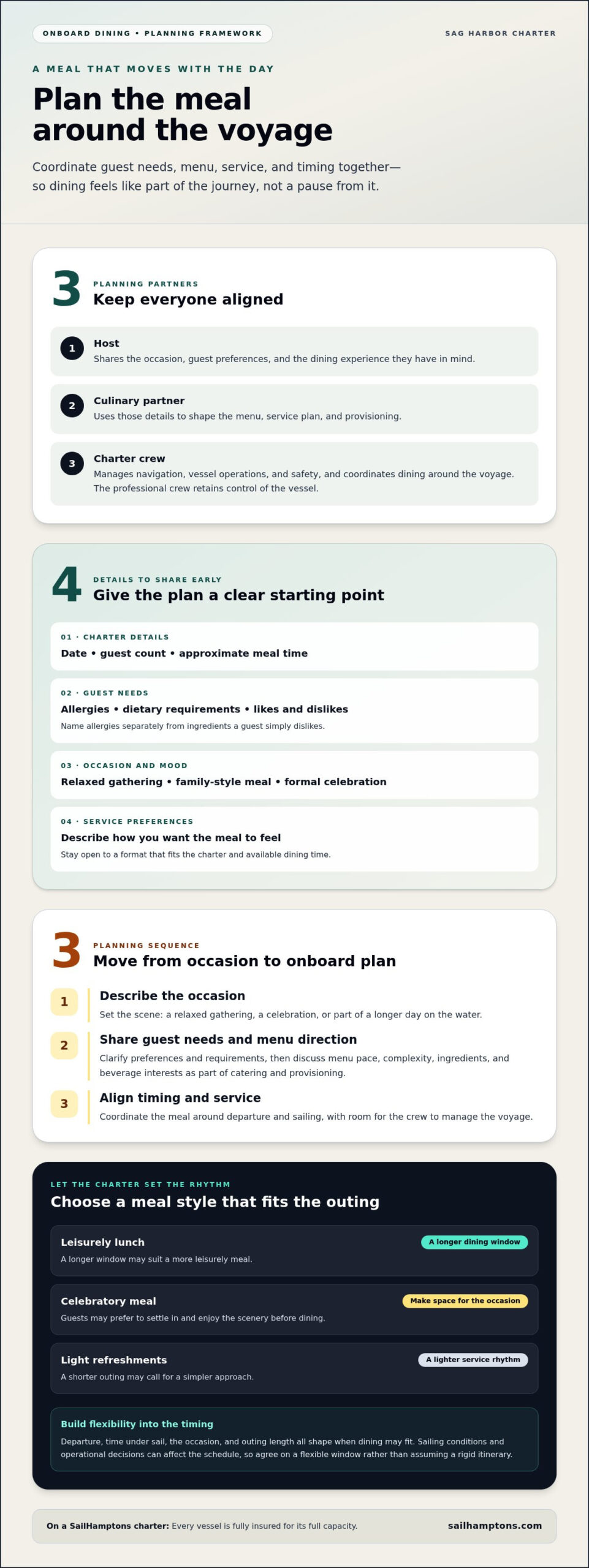
Keep the host, culinary partner, and charter crew informed. The host shares the occasion, guest preferences, and desired dining experience. The culinary partner uses those details to shape the food and service plan. The crew manages navigation, vessel operations, and safety, and coordinates how dining fits the voyage. Guests do not direct vessel operations; the professional crew retains control throughout the charter.
To make the conversation useful, share the essentials early and keep the plan clear:
- Describe the occasion. Say whether the meal is for a relaxed gathering, a celebration, or part of a longer day on the water.
- Share the guest picture. Provide the group size, preferences, allergies, and dietary requirements so the culinary plan can account for them.
- Align on timing. Discuss when dining might fit around departure and sailing, while leaving the crew room to manage the voyage.
For a broader look at planning the charter itself, explore the Sag Harbor private boat charter guide. When the meal is planned around the journey, the harbor and open water become part of the occasion.
How to plan the menu, guest details, and provisioning
A well-planned meal starts with a clear picture of the gathering. Before discussing individual dishes, share the details that will shape the experience: charter date, approximate meal time, guest count, occasion, and the atmosphere you have in mind. These basics turn “something special” into a practical dining plan for your time on the water.
For hosts learning how to coordinate with a private chef on a yacht, a simple sequence helps: describe the occasion, share guest needs, discuss menu direction, then settle on timing and service preferences. This gives the culinary partner and charter crew a common framework for coordinating catering and provisioning as part of a customized onboard food experience.
What information should you share before the charter?
Gather the practical details in one place and share them early enough to inform menu planning. Be specific about allergies and dietary requirements, and distinguish these from preferences. For example, identify an allergy separately from an ingredient a guest simply dislikes. A concise, accurate list helps the culinary partner plan thoughtfully and reduces last-minute uncertainty.
- Charter details: Share the date, guest count, and approximate time you would like to eat.
- Guest needs: List allergies, dietary requirements, and notable likes or dislikes.
- Occasion and mood: Describe whether you are imagining a relaxed gathering, a family-style meal, or a more formal celebration.
- Service preferences: Explain how you would like the meal to feel, while staying open to a format that suits the charter and timing.
These details help shape the food experience around your group and the voyage. Be clear about what matters most to you, such as a particular dining atmosphere or a menu that accounts for everyone’s requirements, then coordinate the plan with the culinary partner and crew.
How do menu and provisioning decisions come together?
Once the essentials are clear, discuss the menu’s pace and complexity alongside the time available for dining. A longer window may suit a leisurely meal, while a shorter outing may call for a simpler approach. Share ingredient preferences and beverage interests as part of the catering conversation so they can be considered together, rather than added as afterthoughts.
Provisioning is part of that discussion. The dishes, guest requirements, and timing inform what needs to be arranged for the experience. Clear preferences help the culinary partner plan, while coordination with the crew keeps the food plan aligned with the charter. For inspiration before settling on a menu, browse this Sag Harbor restaurants guide and note flavors or styles that appeal to your group.
SailHamptons’ customizable catering options and onboard food experiences can be shaped around your gathering. Every vessel is fully insured for its full capacity. To explore the setting for your plans, discover a Sag Harbor charter with SailHamptons.
Choose a dining style that fits your group and charter
The right dining style supports your occasion without competing with the time you want to spend on the water. A milestone gathering may call for a more personalized meal, while a short, informal outing may suit a simpler food plan. Consider how much attention you want the meal to take, how your guests like to gather, and how much of the charter you want to leave open for sailing and conversation.
Use these formats as planning starting points, not fixed packages. Each has different coordination needs, and the best fit depends on your group and voyage.
| Format | Best-fit occasion | Coordination needs | Timing considerations |
|---|---|---|---|
| Chef-led meal | An intimate gathering or milestone where a tailored dining experience is central | Discuss guest preferences, dietary needs, desired atmosphere, and service pacing with the culinary partner and crew | Fit the meal plan to the charter schedule and the time available for dining |
| Customizable catering | A celebration or group outing where food should complement the gathering | Share the occasion, guest needs, and food preferences as part of catering coordination | Choose an approach that works around departure, sailing, and the group’s plans |
| Lighter food experience | A shorter outing or casual gathering where guests want to keep the day relaxed | Set expectations for a simpler plan and communicate any dietary requirements | Keep service flexible so it does not dominate a brief charter |
When might chef-led dining suit the occasion?
A chef-led approach may suit a milestone or intimate gathering when the meal is an important part of the celebration. It lets the host put guest preferences and the desired atmosphere at the center of planning. Start with the experience you want, then shape the menu and service pace around the time available. The focus is thoughtful coordination, not an elaborate meal for its own sake.
When is a catered or simpler food experience a better fit?
For a shorter sail or informal group, a less elaborate plan can leave more room for conversation and scenery. SailHamptons offers customizable catering and beverage options as part of a hospitality-focused charter, with details shaped around the gathering. If you are planning a celebration, the Sag Harbor luxury yacht events guide offers relevant occasion inspiration.
As you decide, ask what matters most to your group: a personalized dining focus, a convenient catered plan, or a light touch that keeps the outing unhurried. There is no universal best choice. Share your priorities with the culinary partner and crew so the food plan fits the charter’s rhythm. Every vessel is fully insured for its full capacity.
Coordinate timing, onboard roles, and guest expectations
A smooth meal plan needs a clear handoff between host, culinary partner, and charter crew. Give everyone the same current information, then keep the plan flexible enough to accommodate the voyage. This is a practical part of how to coordinate with a private chef on a yacht: agree on a dining window, clarify who is handling each food-related detail, and let guests know the general rhythm before they arrive.
Use a simple timeline to keep communication organized:
- Early in planning: Share the guest count, occasion, dietary needs, allergies, and preferred dining style with the culinary partner and charter team.
- As the charter approaches: Align the intended meal window with the charter schedule and confirm the food and service plan with the people coordinating it.
- Before boarding: Reconfirm the latest guest details and plan, then give your group a concise overview of what to expect.
How should meal timing fit the sailing schedule?
Discuss the dining window with the charter team before settling on a menu or service pace. A meal planned early in the outing may call for a different rhythm than one planned after guests have spent time sailing and enjoying the setting. Treat the window as a coordinated plan, not a promise that every moment will follow a fixed itinerary. The crew retains control of the vessel and makes operational decisions throughout the charter.
The captain and crew manage navigation, vessel operations, and safety, while food service is coordinated around those responsibilities. That division keeps expectations clear: hosts communicate the desired experience, and the professional crew determines how it fits the voyage. SailHamptons’ professionally trained crew follows USCG requirements. Every vessel is fully insured for its full capacity, and charters booked for more than six passengers are held aboard USCG-inspected “Small Passenger Vessels.”
What should guests know before coming aboard?
Give guests a helpful overview without overloading them with logistics. Let them know the general meal style and when you expect dining to fit into the outing, while explaining that timing may remain flexible around the voyage. A little context helps everyone settle in and enjoy the experience instead of waiting for a precise service moment.
Keep the details consistent across your communications. If a guest shares an allergy or dietary requirement, pass it along to the culinary partner and charter team, then make sure your final guest update reflects the same information. Do not rely on assumptions or informal side conversations for important food needs. One accurate, up-to-date record is easier for everyone to follow.
Before boarding, confirm who is coordinating food details and who is directing vessel operations. That clarity lets the dining plan support the occasion while the crew focuses on the safe operation of the charter. To begin shaping a well-coordinated outing, plan your SailHamptons charter.
Plan a chef-led Sag Harbor charter with SailHamptons
A memorable meal on the water begins with an outing designed around your group. SailHamptons brings hospitality to its private yacht charters with customizable full-service catering options and onboard food experiences. Share the occasion, guest preferences, and dining style you have in mind, then coordinate the food experience with the charter so it complements your time on the water.
The fleet offers distinct settings for a Sag Harbor outing: Luna (Bermudian Schooner), Cosmos (Mahogany Performance Trimaran), and Blue Sky (Downeast Lobster Yacht, coming soon). Blue Sky is scheduled to launch in fall 2026. Approval for 30 passengers is pending completion of its stability test. Consider the feel of your gathering and the experience you want aboard as you begin shaping the occasion.
What makes the SailHamptons approach reassuring?
Every vessel undergoes comprehensive yearly USCG inspections for commercial passenger vessels and is fully insured for its full capacity. Professionally trained, USCG-compliant crews retain control of the vessel and manage navigation, vessel operations, and safety throughout the charter. Charters booked for more than six passengers are held aboard USCG-inspected “Small Passenger Vessels.”
What are the next steps for planning your charter?
Start with a few simple details: the occasion, your guest group, preferred timing, and the style of dining you envision. Then share allergies, dietary requirements, and food preferences as part of the planning conversation. These details help shape a catering or onboard food experience that feels personal and fits the charter schedule.
Chef-led culinary charters are occasional and partner-led, while customizable catering options can make food a considered part of a hospitality-focused voyage. Align the experience with your priorities, whether you are gathering for a celebration or hoping to enjoy good food against the East End shoreline. Planning the charter and dining together keeps the details connected from the outset.
As you explore how to coordinate with a private chef on a yacht, keep the conversation centered on your guests and the time you want to spend on the water. SailHamptons’ team can help shape a private charter around the occasion and its food experience. Plan your SailHamptons charter and begin imagining a day that feels distinctly your own.
Shape a Day on the Water That Feels Like Yours
Before settling on the final details, picture the moment you want your guests to remember: a quiet toast as the shoreline slips by, an unhurried meal together, or a celebration in the open air. Let that feeling guide the experience. It gives your planning a personal center while leaving room for the charter and the day’s natural rhythm to shape what unfolds.
That is the value of knowing how to coordinate with a private chef on a yacht. The goal is not simply to serve a meal aboard; it is to create a gathering connected to its setting and to the people sharing it. With a thoughtful plan and space for the voyage to breathe, even simple moments can become part of the occasion.
Picture the kind of day you would love to host. Plan a memorable SailHamptons charter with customizable onboard dining, and start shaping an experience your guests will remember fondly.
Frequently Asked Questions
How far in advance should I coordinate a private chef for a yacht charter?
Start planning as soon as your charter date and general plans take shape. There is no single lead time that suits every gathering, since the menu, group size, and dining style affect the coordination involved. Early conversations give you room to collect guest details and refine the experience. For how to coordinate with a private chef on a yacht, treat food planning as part of organizing the charter, not a last-minute add-on.
What details should I share about guests’ allergies and dietary preferences?
Share a clear, current list that distinguishes allergies from preferences and dietary requirements. For each allergy, identify the ingredient and any relevant severity or restriction. Include preferences such as vegetarian choices or ingredients guests avoid. If details change, update the same planning contacts promptly so the culinary conversation reflects the group’s needs accurately.
Can a yacht chef adjust meal timing to the sailing schedule?
Yes. Coordinate the meal plan around the charter schedule, discussing timing alongside the voyage rather than treating it as a fixed restaurant reservation. Share your preferred dining window and any occasion-related timing, such as a birthday toast. The captain and crew retain control of vessel operations and may make decisions that affect the day’s flow, so leave flexibility in the plan and avoid promising guests an exact service time.
What is the difference between a private chef and yacht catering?
A private-chef experience generally places greater emphasis on a tailored meal and culinary planning, while catering can provide a customizable food experience suited to the gathering. The right approach depends on how central dining is to your outing and how much structure you want. SailHamptons offers customizable catering and beverage options, while Culinary Charters are occasional and partner-led. Discuss the experience you want as part of planning your Sag Harbor charter.
Who coordinates the meal plan with the yacht crew?
The host brings together guest information and dining preferences, while the culinary partner and charter crew coordinate the food plan with the voyage. Keep communication consistent by sharing one up-to-date set of guest details, including any changes. The captain and crew manage navigation, vessel operations, and safety; the host does not direct vessel decisions. This clear division helps keep meal arrangements separate from operational responsibilities.
Can a chef-led yacht meal work for a birthday or corporate event?
Yes. A planned dining experience can complement personal celebrations and professional gatherings. For a birthday, you might make the meal a focal point or plan a relaxed toast around it. For a corporate event, consider how food fits the conversation and purpose of the gathering. SailHamptons offers birthday and corporate event charters, with catering options that can be tailored to the occasion.
What should I tell guests before a chef-led yacht charter?
Send a short note covering the planned dining style, approximate meal window, and the fact that timing can flex with the voyage. Ask guests to share allergies and dietary requirements with you before the charter, rather than relying on informal updates on the day. You can also explain whether the gathering centers on a meal or whether dining is one part of a broader outing on the water.