
What if the water became part of your music video’s visual language, rather than just a backdrop? Searching for “music video location on the water Hamptons” means looking for a setting with character and a vessel that supports the concept. Sag Harbor’s waters bring a distinctive East End atmosphere, but the right look also needs to work with the realities of filming afloat.
A private charter brings your production onto the water in a setting with its own visual identity. Luna, a Bermudian schooner; Cosmos, a mahogany performance trimaran; and Blue Sky, a classic lobster yacht, each create a different impression. Practical details matter just as much: working space, movement, changing light, weather, sound, crew needs, and permissions all shape the plan.
This guide explains how to match a vessel and setting to your creative direction, prepare for an on-water production, and account for local filming requirements. With thoughtful planning, the Hamptons can offer more than a beautiful coastal frame. The water can bring your video a sense of place, motion, and atmosphere.
Key Takeaways
- Choose a music video location on the water Hamptons that serves the visual concept, not just the coastal setting.
- Match the vessel’s character to the treatment, camera framing, and cast needs. Luna, Cosmos, and Blue Sky each bring a distinct visual identity.
- Plan around movement, wind, shifting light, and sound so the production can adapt to on-water conditions.
- Build a practical sequence from creative brief to vessel choice and shoot-day coordination, with clear roles for the production team.
- Review local filming permissions and vessel-specific safety and access arrangements during pre-production.
Why choose a music video location on the water in the Hamptons?
A familiar waterfront view can be beautiful yet feel interchangeable. For a music video, the challenge is finding a Hamptons setting that gives the images a clear sense of place and supports the song’s mood. Choosing a music video location on the water in the Hamptons lets the setting become part of the visual story, rather than scenery behind the performer.
An on-water music-video location combines a vessel with the surrounding waters as a visual setting. That combination changes what the camera can capture. The horizon shifts with the vessel, reflections break and reform, and the shoreline can move through the frame. A fixed waterfront gives you a steadier composition. Filming afloat can add motion and openness, but requires the production to adapt to a less predictable environment.
The Hamptons’ coastal identity gives filmmakers a rich starting point, from maritime character to expansive seascapes. For general background on the area’s geography and culture, see The Hamptons. Sag Harbor and nearby East End waters add local context, while the specific look depends on the chosen location and shoot plan.
What visual mood can a Hamptons water setting create?
Open water can make a frame feel spacious and unhurried; a visible shoreline adds texture and a stronger sense of place. Natural light changes across the water, shifting reflections and the balance between sky, vessel, and subject. A schooner’s silhouette may suggest classic maritime romance, while a mahogany performance trimaran or classic lobster yacht brings a different character. Treat these as creative cues, then assess how each vessel fits the planned shots.
When does filming on a boat suit the creative brief?
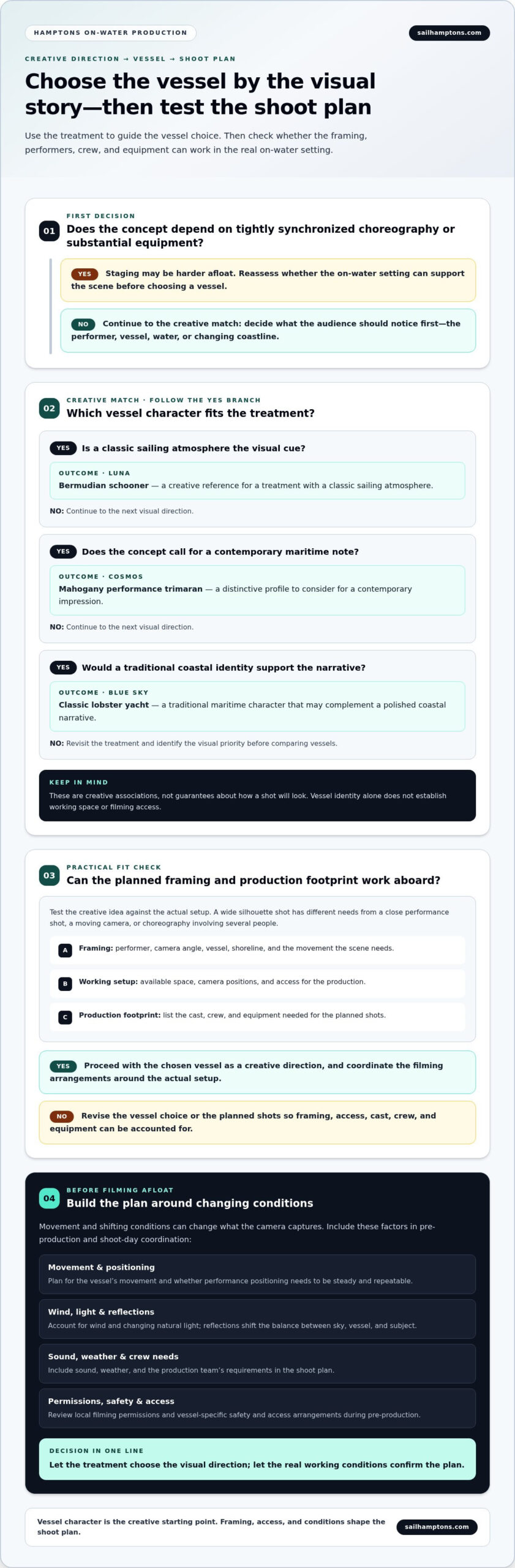
A boat setting can suit a treatment built around movement, reflected light, maritime details, or a more removed atmosphere. It can be harder to manage when a concept depends on tightly synchronized choreography or substantial equipment, because the working environment may limit how a scene can be staged. Translate the treatment into production priorities before choosing a vessel.
Start by deciding what the audience should notice first: the performer, the vessel, the water, or the changing coastline. Then define how much movement the visuals need and what the cast and crew must accomplish in each setup. These decisions help establish whether an on-water setting supports the concept and give vessel selection a clear creative purpose.
- Visual priority: Identify the essential subject and background in each key frame.
- Performance needs: Note whether choreography depends on steady, repeatable positioning.
- Production footprint: List the people and equipment required for the planned shots.
With those priorities defined, the water becomes more than an elegant backdrop. It becomes a deliberate creative choice that brings a distinctive coastal atmosphere while keeping the production’s practical needs in view.
How vessel choice shapes a music video shoot on the water
A vessel isn’t simply a backdrop; its shape and character influence how a frame reads. For a music video location on the water in the Hamptons, start with the treatment, then consider which vessel’s visual identity best supports it. A romantic, old-world mood calls for a different silhouette than a sleek, energetic concept. The choice also affects composition, so plan for the performer, camera angle, shoreline, and any movement the scene needs.
Luna, Cosmos, and Blue Sky: three distinct visual directions
Each vessel offers a different starting point for the creative conversation. Luna’s Bermudian schooner has a classic sailing character. Cosmos, a mahogany performance trimaran, has a distinctive profile and contemporary impression. Blue Sky, a classic lobster yacht, evokes a traditional maritime identity. Use these descriptions to guide mood boards, then plan filming around the actual working space, camera positions, and access needed for the production.
Luna: Bermudian schooner, a natural creative reference for a treatment with a classic sailing atmosphere.
Cosmos: Mahogany performance trimaran, a distinctive option to consider for a concept seeking a contemporary maritime note.
Blue Sky: Classic lobster yacht, whose traditional character may complement a polished coastal narrative.
Match the vessel’s character to the music video treatment
Translate the visual treatment into choices the production can compare. If elegance leads, consider how the schooner’s profile supports the composition. If the brief calls for a sense of motion, consider whether Cosmos’s performance-trimaran identity fits the intended mood. For a classic coastal atmosphere, Blue Sky’s lobster-yacht character may be a useful reference. These are creative associations, not guarantees about how a particular shot will look.
Next, test the idea against the framing and performers. A wide shot emphasizing silhouette has different needs from a close performance shot, moving camera, or choreography involving several people. List the cast, crew, and equipment required, then plan access, setup, safety, and filming arrangements for the project. The U.S. Coast Guard Boating Safety resource provides general boating-safety context as the team develops its plan.
Keep vessel identity separate from production assumptions. A vessel’s name and type can inspire the treatment, but don’t establish working space or filming access. For broader regional charter context, explore this Sag Harbor private boat charter guide. You can also review SailHamptons private charters to consider how each vessel’s character might serve the creative direction.
What makes filming on the water challenging, and how to plan for it
A boat shoot needs close coordination. The frame may shift as the vessel moves, wind can affect performance and recorded sound, and light over open water can change while the crew resets. These conditions don’t rule out a music video location on the water for Hamptons productions. They make preparation essential. Separate must-have shots from flexible ideas so the team can adapt without losing the concept.
Planning principle: Let creative priorities shape the setup, and let safe access and real conditions shape how each shot is made.
Plan camera, sound, cast, and crew around the vessel
Begin with a focused shot list. Identify the camera positions, performers, and equipment each setup needs, then plan how people and gear will move between them. Onboard space is shared working space, so distinguish essential items from extras. Decide where equipment can be kept secure and out of the way, and coordinate movement with the captain and crew. Build the plan around the actual vessel rather than assuming a particular filming layout or access arrangement.
Wind and water ambience affect sound choices. A performance intended for playback has different audio needs from a scene that depends on clean dialogue or live vocals. Discuss audio priorities in advance: which moments need usable recorded sound, and which can rely on playback or be captured separately? Plan camera movement just as deliberately. A shot that works on a stable set may need a simpler position afloat, particularly if people must pass through the same area.
Account for light, weather, and local filming permissions
Choose the desired quality of light before building the day’s visual sequence. Soft morning light, brighter midday conditions, and late-day warmth each create a different look. Cloud, wind, and changing conditions can affect what is practical on the day. Group shots by lighting needs where possible, but leave room to change the order instead of tying the schedule to one exact moment.
Permissions depend on the specific location and activity. Before production, identify the relevant local authority or property representative and verify applicable filming requirements for the proposed site, vessel, and shoot plan. On-water filming may raise questions beyond filming on shore, so describe the planned activity clearly when checking requirements. General maritime context is available from the Maritime Law Association of the United States, but it doesn’t replace location-specific guidance.
Review these decisions together before shoot day:
- Shot priorities: Mark essential setups and identify scenes that can be simplified.
- People and equipment: Plan who needs to be where and how gear will be managed between shots.
- Conditions and permissions: Build flexibility into the schedule and verify requirements for the precise location and activity.
That coordination lets the production make use of the water’s visual character while keeping the plan grounded in the vessel, crew, and conditions on the day.
A practical planning sequence for a Hamptons music video shoot
Turn the creative idea into decisions the production team can act on before shoot day. For a music video location on the water in the Hamptons, align the visual treatment with the vessel, crew, schedule, permissions, and production needs. This sequence keeps those pieces connected as the plan takes shape.
Turn the treatment into a vessel and setting brief
Start with a concise brief that makes the look tangible. Gather visual references, describe the intended mood, and identify the performers, crew, and equipment needed for essential shots. Separate must-have footage from optional material. If time or conditions change, that distinction helps the team protect the heart of the concept instead of trying to capture every idea.
- Define the visual priorities. Note the key frames, performance moments, and relationship between the subject, vessel, and surrounding water. Specify what viewers should notice first.
- Shortlist by character. Use each vessel’s identity as a creative guide. Luna’s schooner, Cosmos’s mahogany performance trimaran, and Blue Sky’s classic lobster yacht suggest different moods. Plan filming space, access, and equipment arrangements separately.
- Map the production footprint. List cast, crew, camera and sound equipment, wardrobe, and props. Decide what is essential, what can be reduced, and how the team will keep gear organized and secure aboard.
Coordinate timing, permissions, and shoot-day essentials
Build a proposed schedule around the light that suits the treatment, while leaving flexibility for changing outdoor conditions. Group shots by location, setup, or lighting need where practical. Decide in advance how the plan could adapt if wind, weather, or the pace of the shoot changes. A simpler alternate shot can help protect the schedule without abandoning the visual direction.
Before finalizing the plan, identify the specific location and filming activity, then verify applicable permissions and local requirements with the relevant authorities or property representatives. Include production-specific arrangements in the pre-shoot checklist. Requirements for one site or activity may not apply to another.
Prepare the crew for the setting: communicate what to bring and wear, and plan how equipment, wardrobe, and props will be managed aboard. Confirm the shoot-day sequence and responsibilities with the captain and crew, including how the production will coordinate movement and access. For broader charter preparation, the Hamptons sailing charter checklist offers useful context to include in your planning.
Use this framework to shape a considered, realistic brief, then explore SailHamptons private charters as a distinctive setting for your creative concept.
Create a distinctive waterborne setting with a SailHamptons private charter
Once the creative direction and production priorities are clear, a private charter can bring the Hamptons setting into the frame. SailHamptons offers bespoke private charters in the Sag Harbor area, where a vessel’s character can help set the mood for a music video. Choose a setting that complements the treatment, and plan the shoot around its practical requirements.
Think of the vessel as part of the visual composition. Its silhouette, maritime character, and relationship to the water can inform the atmosphere you want the audience to feel. As you consider a charter, define the project’s creative direction and essential priorities. Production-specific filming access, safety, setup arrangements, and applicable location permissions belong in the plan as well.
Choose a charter vessel that complements the concept
Luna is a large Bermudian schooner, with a classic sailing identity that may suit a treatment seeking an elegant, timeless maritime mood. Cosmos is a mahogany performance trimaran, with a distinct character for a concept seeking a contemporary nautical feel. Blue Sky is a classic lobster yacht, whose traditional style may resonate with a polished coastal story. Use these identities to shape the creative shortlist, then align the choice with the project’s cast, framing, and practical needs.
These are creative reference points, not filming specifications. A vessel’s type alone doesn’t establish camera positions, working space, or equipment access. Keep that distinction clear as you develop the brief, and plan vessel-specific filming and safety arrangements around the actual production. Private charters include a professional captain and crew, supporting a thoughtfully coordinated journey on the water.
Start planning a private Hamptons charter
As you shape a music video location on the water Hamptons concept, bring the essentials together: the visual mood, the scenes that matter most, the people and equipment involved, and your preferred timing. A clear brief helps you assess how a private charter fits the creative direction while keeping practical realities in view. SailHamptons private charter fees include the captain, crew, fuel, and standard amenities for the booking.
Start with the idea itself. Define the look you’re pursuing, then consider a vessel whose character fits the story. A considered brief, along with a plan for permissions and project-specific arrangements, can make the water a distinctive part of the finished work.
Explore a private SailHamptons charter and begin shaping your Hamptons setting.
Shape the water into your next creative direction
Before you move from mood board to production schedule, choose the image you want viewers to remember: a performer framed against open water, a vessel’s silhouette, or the quiet presence of the shoreline. That visual anchor helps your team decide how a private charter fits the treatment and which practical arrangements to address before filming.
For a distinctive music video location on the water Hamptons setting, SailHamptons offers a fleet that includes Luna, a Bermudian schooner; Cosmos, a mahogany performance trimaran; and Blue Sky, a classic lobster yacht. Private charters include a professional captain and crew. The vessel’s character can inspire the look, while your production plan determines how to approach the shoot.
Start with your creative idea, then explore a charter that fits the direction. Explore a private SailHamptons charter and begin shaping a memorable East End setting. Your next striking frame may start with a fresh perspective on the water.
Frequently Asked Questions
Can you record usable audio while filming a music video on a boat?
Yes, but wind, water, and vessel noise can make clean audio harder to capture. Decide whether the scene needs intelligible dialogue or vocals, or whether the finished track will be added in post-production. For example, capture the visual performance to playback and record dialogue separately in a controlled setting. Include audio priorities in the shot list so the director and sound team know which moments need usable production sound.
Can a drone be used for a music video shoot over Hamptons waters?
Possibly, but don’t treat open water as permission to fly. Commercial drone work may require an appropriately certified operator, and local restrictions can apply to launch sites, nearby parks, beaches, and airspace. Sag Harbor’s proximity to East Hampton Airport can also make airspace considerations relevant. Before adding aerial shots to the treatment, verify current FAA requirements and local rules for the planned location, flight, and launch point.
Does filming on a private boat automatically provide permission to film nearby shorelines?
No. Permission to use a boat doesn’t automatically grant permission to film from or on nearby land. Shoreline access, property ownership, and local filming requirements are separate considerations. If the frame includes identifiable private property or the production plans to stage activity ashore, identify the specific location and seek applicable permissions before the shoot. Treat every planned filming area as its own item in the location plan.
How can weather affect a music video shoot on the water?
Weather can influence light, wind, comfort, sound, and whether a planned setup remains practical. Conditions may not stay consistent throughout a shoot. Build a flexible shot order, identify scenes that can be captured in different light, and agree on a simpler alternative if conditions change. For a music video location on the water in the Hamptons, make the weather contingency part of the schedule, not an afterthought.
Should music playback be recorded live during a boat shoot?
Playback is often useful for helping performers match the track during visual takes, but it doesn’t need to serve as the final audio recording. Wind and ambient sound can affect what the camera records, so plan separately for performance playback and finished sound. Before filming, agree on how performers will hear the track and how the editor will receive the final audio. This keeps lip-sync timing clear without relying on noisy on-location sound.
Do I need rights to use a song in a music video filmed on the water?
Yes, filming on a boat doesn’t remove the need to secure appropriate music rights. A song can involve rights in both the underlying composition and the particular recorded performance, so permission for one may not cover the other. Before production or release, establish who controls the relevant rights and what uses are covered, including online distribution or promotion. For a specific track or release plan, seek guidance from a qualified music-rights professional.