
What if the captain’s most important work on your yacht charter is the part you barely notice? If you’re wondering what does a yacht charter captain actually do, the answer goes well beyond steering the boat. Before you step aboard, the captain considers the weather, the vessel’s readiness, your plans, and what might affect the outing. Once underway, they direct the voyage and make decisions as conditions change, while the crew helps your time on the water feel effortless.
It’s natural to wonder how nautical decisions might affect your day, or how the captain’s role differs from the crew’s. The captain provides operational and safety oversight; the crew supports the voyage and guest experience. Knowing who does what can help you relax and know when to share a preference, when to listen for instructions, and what to expect if the plan changes. This guide explains the captain’s role before departure and underway on a private charter around Sag Harbor.
Key Takeaways
- Learn what does a yacht charter captain actually do before departure, from reviewing the vessel and itinerary to considering guest needs and conditions.
- Understand how the captain directs navigation and responds when weather or water conditions call for a change of plan.
- See how the captain’s command role differs from the crew’s operational support and guest-facing hospitality.
- Know how to share your priorities and comfort needs while leaving vessel decisions in the captain’s hands.
- Discover how Captain Davy Jones’s experience in the Hamptons maritime community informs SailHamptons’ approach to a well-managed, welcoming outing.
What Does a Yacht Charter Captain Actually Do Before You Leave the Dock?
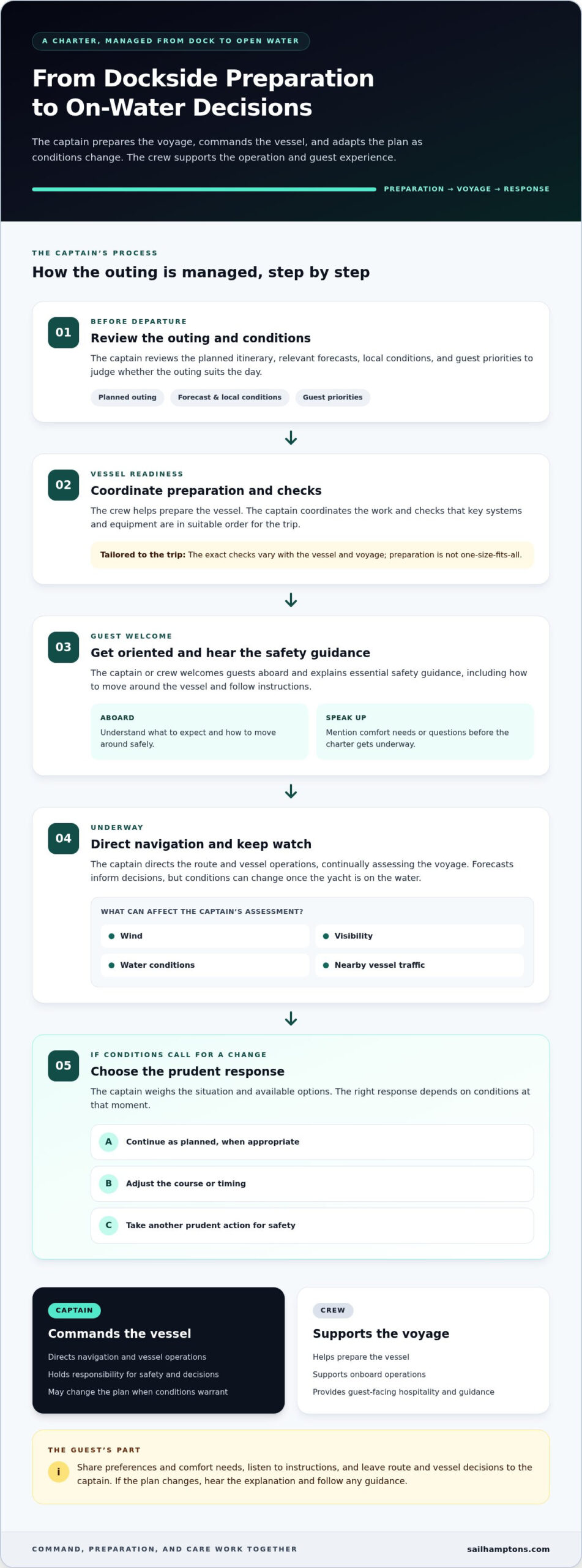
A yacht charter captain commands the vessel and is responsible for the safe conduct of the voyage. So, what does a yacht charter captain actually do before you step aboard? They prepare for the outing by reviewing the plan, the vessel’s readiness, guest priorities, and conditions that could affect the day. This behind-the-scenes work helps set up a relaxed sail and time together on the water.
The role combines command with careful preparation. A sea captain’s broad duties include ultimate command and responsibility, while the details of a charter’s preparation depend on the vessel and voyage. Before departure, the captain considers whether the planned outing suits the conditions and adjusts the plan if needed for safety. A change of course or timing is part of responsible decision-making, not a disruption for its own sake.
Before guests arrive, the captain turns the day’s plan into a voyage suited to the vessel and conditions.
How does the captain prepare for a charter?
Preparation starts with the planned outing and the needs guests have shared. The captain reviews relevant forecasts and local conditions, then considers whether the itinerary remains appropriate. The crew helps prepare the vessel, while the captain coordinates the work and checks that key systems and equipment are in suitable order for the trip. The exact checks vary with the vessel and voyage, so preparation is tailored rather than one-size-fits-all.
Guest priorities help shape the plan, too. A celebration, a preference for a quieter sail, or a comfort concern can provide useful context. Share those details before departure so the captain and crew can take them into account. The captain still makes the final decisions about the vessel and its safe operation.
What happens during the guest welcome and safety briefing?
When you arrive, the captain or crew welcomes you aboard and shares essential safety guidance, including how to move around the vessel and follow instructions. The briefing should be clear and approachable. It’s also a chance to get oriented, understand what to expect, and mention comfort needs or questions before the charter gets underway.
Stay attentive to crew directions throughout the trip. Conditions and onboard activity can change, so instructions may be relevant beyond the initial briefing. Once you understand the practical details, you can turn your attention to the harbor, the breeze, and the company around you.
How a Yacht Charter Captain Manages Navigation, Safety, and Changing Conditions
Once the yacht is underway, the captain directs navigation and makes operational decisions. They keep watch on the route, the vessel, and changing conditions while the crew supports the voyage and guest experience. If you’re asking what does a yacht charter captain actually do during the trip, much of the answer is ongoing judgment, often carried out quietly in the background.
Wind, visibility, water conditions, and nearby vessel traffic can all affect how the captain proceeds. Forecasts inform decisions, but conditions may change once you’re on the water. The captain continues to assess the situation and may adjust the course, timing, or plan when prudent for safety. The right response depends on what’s happening at the time.
Who makes the decisions when the yacht is underway?
The captain holds command responsibility for the vessel throughout the trip. CareerExplorer’s overview of a ship captain’s Duties and Responsibilities includes navigation, safety, and crew management, core areas that help explain why the captain directs vessel operations. Crew members support the voyage through their assigned operational and hospitality duties, but the captain makes decisions about navigation and the vessel. Guests can share preferences and ask questions; they don’t direct the route or override a safety decision.
The captain’s authority allows them to make informed decisions for everyone onboard, even when those decisions change the day’s plan.
How can weather or water conditions change a charter plan?
A planned outing may need to adapt if wind or reduced visibility affects conditions, or if vessel traffic makes the intended course less suitable. The captain weighs the situation and available options, then decides whether to continue as planned, alter the course or timing, or take another prudent action. The right decision depends on conditions at that moment.
On a charter around Sag Harbor, enjoy the scenery while letting the captain focus on the water and the vessel. If a change is needed, listen to the explanation and follow any instructions. Sharing what matters to your group helps the captain and crew understand your priorities, while leaving operational decisions to the captain. That way, you can stay present without having to manage the voyage yourself.
For a private outing with a professional captain and crew, explore SailHamptons private charters.
Captain vs. Crew: Who Handles Sailing, Safety, and Guest Service?
A charter feels seamless because two kinds of work happen together: the captain manages the vessel and its decisions, while the crew supports onboard operations and guest care. The roles complement each other, but they aren’t interchangeable. The captain retains command responsibility, and attentive hospitality gives you more space to enjoy the outing.
| Role | Main responsibility | What guests may notice |
|---|---|---|
| Captain | Commands the vessel, directs navigation, and oversees operations and safety. | Guidance about the voyage or a decision to adjust the plan. |
| Crew | Supports onboard operations and assists with guest-facing hospitality. | A welcome, helpful service, and support during the outing. |
What is the captain responsible for that the crew is not?
The captain leads the vessel’s operation and makes navigation decisions, including whether conditions call for a change. Crew members may assist with tasks that support the voyage, but the captain remains responsible for vessel decisions and operational oversight. The captain doesn’t necessarily perform every technical or service task personally. The division of work depends on the vessel and crew, with the captain directing the operation as a whole.
In plain terms, the answer to “what does a yacht charter captain actually do?” includes holding the decision-making role that keeps the voyage under considered command. You can share preferences and ask questions, while leaving navigation and safety calls to the captain. MYBA’s charter guidelines provide broader context for the responsibilities and expectations involved in a yacht charter.
How does the crew contribute to the charter experience?
The crew supports the practical flow of the outing and helps guests feel welcomed and cared for. That may include offering guidance onboard, assisting with the experience, or providing hospitality-focused service. On a private charter, this attention lets you settle into the occasion while the captain stays focused on vessel decisions.
Good service and safe vessel operation work together. Hospitality doesn’t replace the captain’s authority, and the crew’s support doesn’t shift responsibility for navigation away from the captain. For a broader look at planning a day on the water, explore this Sag Harbor private boat charter guide.
What Guests Can Expect From a Captain During a Sag Harbor Charter
A charter day has a natural rhythm: you arrive, get welcomed aboard, head underway, adapt if conditions call for it, and return to port. Around Sag Harbor, the view may shift from harbor activity to open water, depending on the outing and conditions. The captain oversees the voyage, leaving you free to focus on your occasion and the changing coastal scenery.
- Arrival: Meet the captain and crew and come aboard.
- Welcome: Get oriented, hear essential guidance, and share any priorities or comfort needs.
- Underway: Settle in as the captain directs the vessel and the crew supports the experience.
- Plan adjustment: Listen to any update if conditions or operational decisions call for a change.
- Return: Follow the crew’s directions as the outing concludes and the vessel comes back to port.
How should guests communicate preferences to the captain?
Share the occasion and what matters to your group early, whether you’re celebrating, hoping for a peaceful sail, or have a comfort need the crew should know about. Clear communication helps shape the experience where practical. Preferences can guide the outing, but they don’t guarantee a particular route, pace, or activity. The captain must make vessel decisions with conditions and safe operation in mind.
For practical ideas on getting ready, see the Sag Harbor sailing charter checklist. A little preparation can make boarding feel easier and leave more of the day for conversation, fresh air, and time together.
What happens if the captain changes the plan?
A change may reflect wind, visibility, water conditions, or another operational consideration. The captain may revise the course or timing, or make another prudent adjustment. Listen to the captain and crew as they explain what’s changing, and follow their instructions. Their guidance helps keep the outing well managed while you remain part of the experience.
So, what does a yacht charter captain actually do from a guest’s perspective? They guide the voyage, explain decisions that affect the plan, and leave you room to enjoy the moment. For a private charter shaped around your group and the day on the water, explore SailHamptons private charters.
Meet the Captain: The Expertise Behind a SailHamptons Charter
At SailHamptons, Captain Davy Jones is the owner-operator and a veteran of the Hamptons maritime community. His local experience brings a knowledgeable presence aboard as guests set out around Sag Harbor and the East End of Long Island. A captain’s expertise isn’t only about handling a vessel. It also shows in measured decisions, clear communication, and keeping the day well managed.
What does local maritime experience add to a charter?
Familiarity with the local setting helps a captain consider the outing in its regional context and orient guests to the experience. It doesn’t promise a particular route, destination, or sighting; conditions and the day’s plans still matter. For guests, local perspective can make time on the water feel more connected to Sag Harbor and the wider East End.
SailHamptons’ fleet offers distinct vessels for private outings: Luna, a Bermudian schooner; Cosmos, a mahogany performance trimaran; and Blue Sky, a classic lobster yacht. Each provides a different setting for time on the water, with a professional crew providing hospitality-focused service. The vessel shapes the feel of the outing, while thoughtful hosting helps make it personal.
How does the captain help make the experience feel personal?
Good hosting begins with listening. Clear, approachable communication helps guests understand what to expect, share what matters to their group, and feel at ease aboard. Captain and crew coordinate their efforts so operational decisions and guest care work together. The captain stays attentive to the voyage, while the crew supports the onboard experience, creating a relaxed setting for your occasion.
That balance is especially welcome on a private charter: the details are managed with care, without asking guests to manage the voyage themselves. You can settle into the company, the breeze, and the view, knowing an experienced local captain is leading the outing.
If you’re ready to picture your own day on the water, explore SailHamptons private charters.
Make Your Next Day on the Water Effortless
So, what does a yacht charter captain actually do? They prepare for the voyage, direct the vessel, and make operational decisions as conditions change. The crew supports the experience with attentive onboard service, giving you more time to enjoy the water and the people you’re with.
SailHamptons private charter fees include a professional captain and crew, fuel, and standard amenities for the booking. Choose among distinct vessels, including the Luna schooner, Cosmos trimaran, and Blue Sky lobster yacht, for a private outing around Sag Harbor and the East End.
With the voyage in experienced hands, you can focus on your celebration, conversation, and coastal views. Explore a private charter with SailHamptons and start imagining a memorable day on the water.
Frequently Asked Questions
What does a yacht charter captain do?
A yacht charter captain commands the vessel and is responsible for its safe operation during the outing. In short, what does a yacht charter captain actually do? They help plan the voyage, direct navigation, monitor conditions, coordinate with the crew, and share essential safety guidance with guests. If conditions call for a change of plan, the captain communicates that decision. Specific tasks vary with the vessel, crew, and voyage, including charters around Sag Harbor.
Is the captain included in a private yacht charter?
Yes. SailHamptons private charter fees include a professional captain and crew, as well as fuel and standard amenities for the booking. The captain manages the vessel and its operation, while crew members support onboard operations and guest service. You can enjoy your time on the water without taking on navigation responsibilities. The experience is shaped by the vessel selected and your plans for a charter in Sag Harbor or elsewhere on the East End.
Can guests choose where the captain sails?
Guests can share their priorities and the kind of outing they hope to enjoy, but a requested route or destination isn’t guaranteed. The captain makes operational decisions with the vessel, conditions, and safety considerations in mind. For a Sag Harbor charter, share your preferences as part of planning, then remain open to the captain’s judgment on the water. That balance helps personalize the experience while keeping navigation decisions with the person commanding the vessel.
What happens if the weather changes during a yacht charter?
If conditions change, the captain may adjust the timing, route, or plan based on the situation on the water. A forecast can inform planning but can’t guarantee conditions throughout the outing. Listen to the captain and crew, follow their instructions, and stay flexible if the original plan needs to change. Their guidance helps keep the charter well managed as you enjoy the waters around Sag Harbor.
What is the difference between a yacht captain and the crew?
The captain commands the vessel and oversees navigation and operational decisions; the crew supports the voyage and guest service. Their roles work together, but aren’t interchangeable. Attentive hospitality complements the captain’s responsibility for vessel decisions, while command doesn’t mean the captain personally performs every service task. The exact division of duties depends on the vessel and team. On a SailHamptons private charter, a professional captain and crew are included in the charter fees.
Do guests need boating experience on a captained charter?
Guests generally don’t need boating experience to enjoy a captained charter, because the captain is responsible for operating and navigating the vessel. You should still listen to the safety briefing and follow the captain’s and crew’s instructions throughout the trip. They’ll explain the onboard guidance relevant to your outing, whether you’re setting out from Sag Harbor for a celebration or simply hoping to relax on the water.