Long Cove serves as the local Shelter Island lunch stop in this comparison, while Great Salt Pond on Block Island offers a longer getaway, a distinction SailHamptons highlights for local boaters. When comparing the best anchorages near Shelter Island for lunch, decide whether you want to stay close to the East End waters or make an extended outing.
A relaxed meal on the water with SailHamptons is about more than a pretty view. You’ll also want to weigh mooring options, boat traffic, and whether a dinghy makes it easy to explore nearby shores. This guide compares Long Cove with Great Salt Pond, which has roughly 90 moorings, and considers a third shore-access option. You’ll get a clearer sense of how each stop suits your lunch plans, what to consider before settling in, and where a leisurely sail can make the day feel seamless.
Key Takeaways
- Separate Shelter Island stops from Block Island options before planning your lunch route.
- Compare mooring arrangements and expected boat activity to choose a more comfortable place to pause.
- At Long Cove, consider how low tide and a dinghy can shape shore exploration.
- Weigh nearby dining against the practicalities of going ashore, including where you can land a dinghy.
1. Crowds and boat traffic
First, distinguish Long Cove on Shelter Island from Great Salt Pond on Block Island. They are separate destinations, not neighboring lunch anchorages, and choosing between them changes the length and character of your day. Compare the route, approach, and activity near each entrance before deciding where to pause. A nearby cove may work for a short lunch break; a farther destination can turn lunch into a longer outing. Let your available time and the waters you want to explore guide your choice.
Boat traffic can change the feel of an anchorage, even when the shoreline looks quiet. As you approach Long Cove, watch for vessels entering and leaving, and leave them room to maneuver. At Great Salt Pond, assess traffic near the entrance and watch for boats already moving through the area. A slow, deliberate arrival gives you time to observe before choosing where to stop. Keep an eye on nearby vessels as well as the shoreline.
Once you arrive, consider the ground and the space around your intended lunch spot. A clear view of nearby boats helps you judge whether your position leaves room for arrivals and departures. Avoid blocking another vessel’s route, and watch for changes in activity before settling in. In Long Cove, use the surrounding shore to orient yourself; at Great Salt Pond, take time to assess the broader harbor setting.
For a calmer lunch stop, compare the destinations at the time you plan to cruise instead of relying on appearance alone. Check a current chart, note the entrance, and observe boat movement as you arrive. If traffic is building near your preferred spot, leave passing vessels clear space or continue to another suitable area. This helps balance a scenic lunch with an unhurried arrival, whether Long Cove’s Shelter Island setting or Great Salt Pond on Block Island suits your plans.
2. Great Salt Pond anchorage and moorings
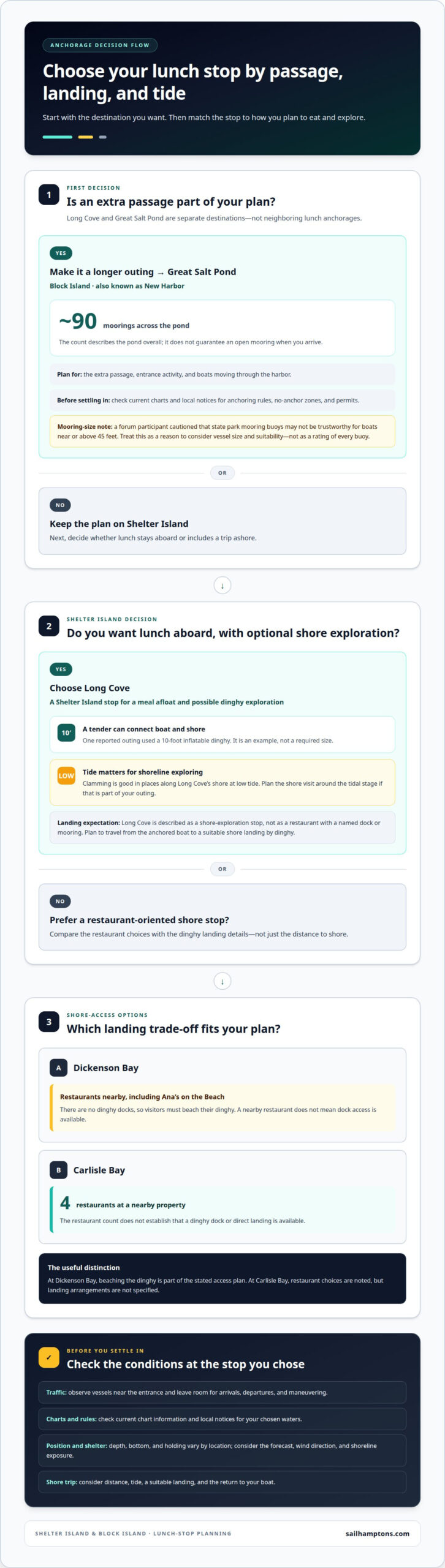
Great Salt Pond, also known as New Harbor, sits on Block Island, not Shelter Island. It offers a different sailing destination, so account for the extra passage when comparing lunch plans. The pond has roughly 90 moorings, giving visiting boaters multiple mooring locations to consider. That number describes the pond overall, not guaranteed open spaces on arrival. A summer lunch stop may feel different from a quieter visit, depending on arrivals and activity.
Anchoring rules, no-anchor zones, and permit requirements depend on the specific waters and current local regulations. Great Salt Pond is on Block Island, so Shelter Island guidance may not apply. Use current charts and local notices for the anchorage you choose.
Depth, bottom composition, and holding quality vary by position, and no specific measurements are available here for Great Salt Pond or Long Cove. Choose a location using current chart information, then consider whether the ground suits your anchor and whether nearby boats leave enough room.
Shelter also depends on wind direction and shoreline shape. Compare the forecast with the cove or harbor’s exposure before choosing a lunch stop, since no single Shelter Island anchorage suits every wind direction.
Great Salt Pond’s mooring count doesn’t establish restaurant menus, prices, or operating hours near Shelter Island. Those details depend on the restaurant and season, while the pond itself is on Block Island. Tides, currents, and navigation hazards likewise vary by route and conditions. Use current charts and tide information for your sailing plan, and stay alert to traffic while approaching or leaving a mooring. A forum participant cautioned that state park mooring buoys may not be trustworthy for boats near or above 45 feet. Treat that as a reason to consider vessel size and mooring suitability, not as a general rating of every buoy in the pond.
3. Long Cove anchorage and nearby dinghy exploration
Long Cove offers a quieter way to extend a Shelter Island lunch beyond the boat. After anchoring, a dinghy can carry you from the vessel to shore for a closer look at the cove. One reported outing used a 10-foot inflatable dinghy for that trip. It’s a practical example of how a small tender can make the shoreline more accessible, while keeping your lunch stop centered aboard your own boat.
At low tide, clamming is good in places along Long Cove’s shore. That makes the tidal stage relevant to a shore visit: plan your time around the lower water if exploring those areas is part of the outing. The shoreline experience can complement lunch afloat, adding a hands-on reason to leave the boat briefly. Keep the purpose simple, and allow time to return to the anchored vessel before resuming your cruise.
For restaurants with dinghy docks, moorings, or easy restaurant-side landings, Long Cove is described as a shore-exploration stop, not a restaurant with a named dock or mooring. The practical option supported here is to travel from the anchored boat to shore by dinghy, rather than expecting a restaurant landing at the cove.
To reach shore for lunch on Shelter Island, use a dinghy to travel between the anchored boat and a suitable landing. The 10-foot inflatable used on one Long Cove trip shows one example, not a required tender size. Before setting out, consider the distance to shore, the tide, and how you’ll make the return trip. Keep your landing plan consistent with the shoreline you intend to visit, and avoid treating clamming areas as restaurant access. Long Cove’s appeal is the blend of a meal aboard and optional shore exploration, especially when low tide brings the shoreline’s clamming areas into view.
4. Which Shelter Island anchorages are closest to restaurants or shore access?
For lunch ashore, compare Dickenson Bay and Carlisle Bay by considering both dining and boat access. Dickenson Bay has restaurants, including Ana’s on the Beach, but no dinghy docks, so visitors must beach their dinghy. A nearby restaurant does not necessarily mean you can arrive by dock. Factor in the landing itself as well as the meal when choosing this stop.
Carlisle Bay offers a different dining option: a nearby property has four restaurants. That provides several choices around one shore area, but it does not establish that a dinghy dock or direct landing is available. Distinguish the number of restaurants from ease of boat access. The route from anchorage to shore still shapes how convenient a lunch stop feels.
Long Cove is the more relevant Shelter Island example for dinghy exploration. A reported trip used a 10-foot inflatable dinghy to travel from an anchored boat to shore. At low tide, clamming is good in places along Long Cove’s shore, adding a natural activity to a stop. The available details don’t identify a restaurant or dinghy dock at Long Cove, so treat it as a shore-exploration option rather than a restaurant-side mooring.
To choose, first decide whether lunch ashore or lunch aboard matters more. For Dickenson Bay, account for beaching the dinghy; for Carlisle Bay, weigh the nearby four-restaurant choice against the landing route. For Long Cove, plan around the dinghy trip and low-tide shore exploration. These distinctions help match the anchorage to the day you want, instead of choosing by restaurant count alone. If you’d like a more tailored day on the water, explore sailing options as part of your lunch plans.
Dickenson Bay has restaurants, including Ana’s on the Beach, but no dinghy docks, so visitors must beach their dinghy. Carlisle Bay has a nearby property with four restaurants, though its landing access is not established. Long Cove is described as a dinghy trip to shore, not a restaurant stop.
SailHamptons
SailHamptons is a natural next step if you’d rather make the day about sailing than managing every detail aboard. Its private charters offer a way to enjoy the East End’s coastal scenery with a professional, hospitality-focused crew. Choose among Luna Private Charter, Cosmos Private Charter, and Blue Sky Private Charter, each with a distinct vessel and feel. The right fit depends on the kind of outing you have in mind, whether you’re planning a relaxed escape or gathering friends for time on the water.
A charter is not a substitute for comparing anchorage access, moorings, or shore landings. It is another way to enjoy a hosted sailing experience without arranging a stop independently. SailHamptons also offers a Public Sunset Sail for a different kind of evening on the water.
Contact SailHamptons to discuss a sailing experience for your day on the water.
Shape a Lunch Sail That Feels Like Yours
The best anchorages near Shelter Island for lunch are just one part of a memorable day afloat. Decide what you want the outing to feel like: an unhurried meal aboard, a shoreline visit, or a longer passage that makes the journey part of the occasion. That choice can guide your route and pace, leaving time to enjoy the water without rushing between stops.
As you plan, picture the transitions as well as the destination: leaving the dock, settling into your chosen waters, and returning with time to spare. A thoughtful itinerary lets the scenery set the rhythm and keeps the lunch stop in harmony with the day. For a sailing experience shaped around your plans, contact SailHamptons to plan your outing. Choose your pace, gather your favorite people, and look forward to a fresh perspective from the water.
Frequently Asked Questions
What are the best boat anchorages near Shelter Island for lunch?
Long Cove suits lunch aboard with an optional dinghy trip ashore. Dickenson Bay has restaurants within reach, but going ashore requires beaching your dinghy. Carlisle Bay offers another dining option, with four restaurants at a nearby property. Great Salt Pond is on Block Island, not Shelter Island, so treat it as a separate destination when comparing the best anchorages near Shelter Island for lunch.
How busy do Shelter Island anchorages get at lunchtime and on weekends?
Expect activity to depend on how many boats are arriving, departing, or moving through the chosen cove at that time. Weekends and lunchtime can bring changing traffic, but there’s no reliable crowd count to use for Long Cove, Dickenson Bay, or Carlisle Bay. On approach, watch vessel movement and leave room for maneuvering; if your preferred spot feels congested, choose a different suitable position.
Which nearby restaurants offer dinghy docks, moorings, or easy access from anchorages?
Dickenson Bay has restaurants, including Ana’s on the Beach, but no dinghy docks, so visitors must beach their dinghy. Carlisle Bay has a nearby property with four restaurants, but its landing access is not established. Long Cove is described as a dinghy trip to shore, not a restaurant-side landing.
What are the tide, current, and navigation hazards near Shelter Island anchorages?
Tides, currents, and navigation hazards vary by route and conditions, so use current charts and tide information. At Long Cove, low tide matters for clamming along parts of the shore. Watch boat traffic when approaching and leaving.