
The best onboard meal lets the day, not the serving, take center stage. The best catering menus for a day on the water balance easy-to-enjoy hors d’oeuvres and satisfying meals with tidy desserts and refreshing drinks, while matching the service style to the boat, guest list, and pace of the outing.
It makes sense to want food that feels special without interrupting the view, conversation, or a quiet stretch at anchor. Choose inviting dishes that are simple to enjoy in a relaxed setting, with care given to every part of the menu.
This guide covers meals, sweets, beverages, and small bites, as well as serving options from passed hors d’oeuvres to a more formal meal. It also explains how a theme and the day’s schedule can shape a menu that feels polished, personal, and easy to enjoy aboard.
Key Takeaways
- Choose meals and desserts that are easy to enjoy in a relaxed setting, and balance them with refreshing drinks suited to the day’s pace.
- Match the service style to the gathering: plated meals feel structured, while small bites make it easier to mingle and take in the view.
- Use a thoughtful mix of cold and hot hors d’oeuvres to create variety without making serving feel cumbersome.
- Let a menu theme guide the food and presentation, while keeping the choices practical for the setting aboard.
Meal, dessert, and beverage options
Build the menu around the outing’s rhythm: a relaxed lunch buffet, a two-course dinner, or snacks between sightseeing and time at anchor. For the best catering menus for a day on the water, choose dishes that are easy to serve and enjoy in a compact setting.
Lunch and Dinner Buffets
A lunch buffet might pair chicken with crisp salad, seasonal vegetables, and rolls, giving guests variety without the pace of a formal dinner. For dinner, choose a focused spread with a main dish, complementary sides, and a simple dessert. Prioritize food that is easy to portion and eat while seated. A two-course dinner could begin with soup or salad, followed by a main course and side.
Breakfast, Lunch, and Snack Menus
Boat-friendly breakfasts include pastries, yogurt, and fruit, with coffee or juice. For lunch, sandwiches, wraps, chicken salad, and cut vegetables are practical choices. Snacks such as crackers, nuts, or whole fruit are easy to portion and serve. These options keep breakfast, lunch, and snack menus varied and convenient aboard.
In hot weather, shelf-stable choices such as sealed crackers and whole fruit reduce reliance on refrigeration. Keep prepared foods chilled, serve small portions at a time, and avoid leaving perishable dishes out. This helps food stay appealing and limits unnecessary exposure to warmth.
Finish with compact desserts, such as cookies or individually portioned fruit, and drinks that suit the meal. Water, sparkling water, iced tea, and lemonade offer variety without alcohol. Choose containers that are easy to hold and secure while underway.
Pickup catering works for a planned menu collected before departure, while delivery brings prepared dishes to an agreed handoff point. For either option, coordinate timing with boarding and serving, then choose dishes that travel neatly. A two-course dinner can simplify service: offer a starter and main course, then serve dessert separately.
Plated, buffet, station, family-style, and small-bite service
Service style shapes how guests move, eat, and gather aboard. Choose plated meals, shared buffet dishes, or small bites based on the formality of the occasion and the space available.
Plated and Buffet Dinners
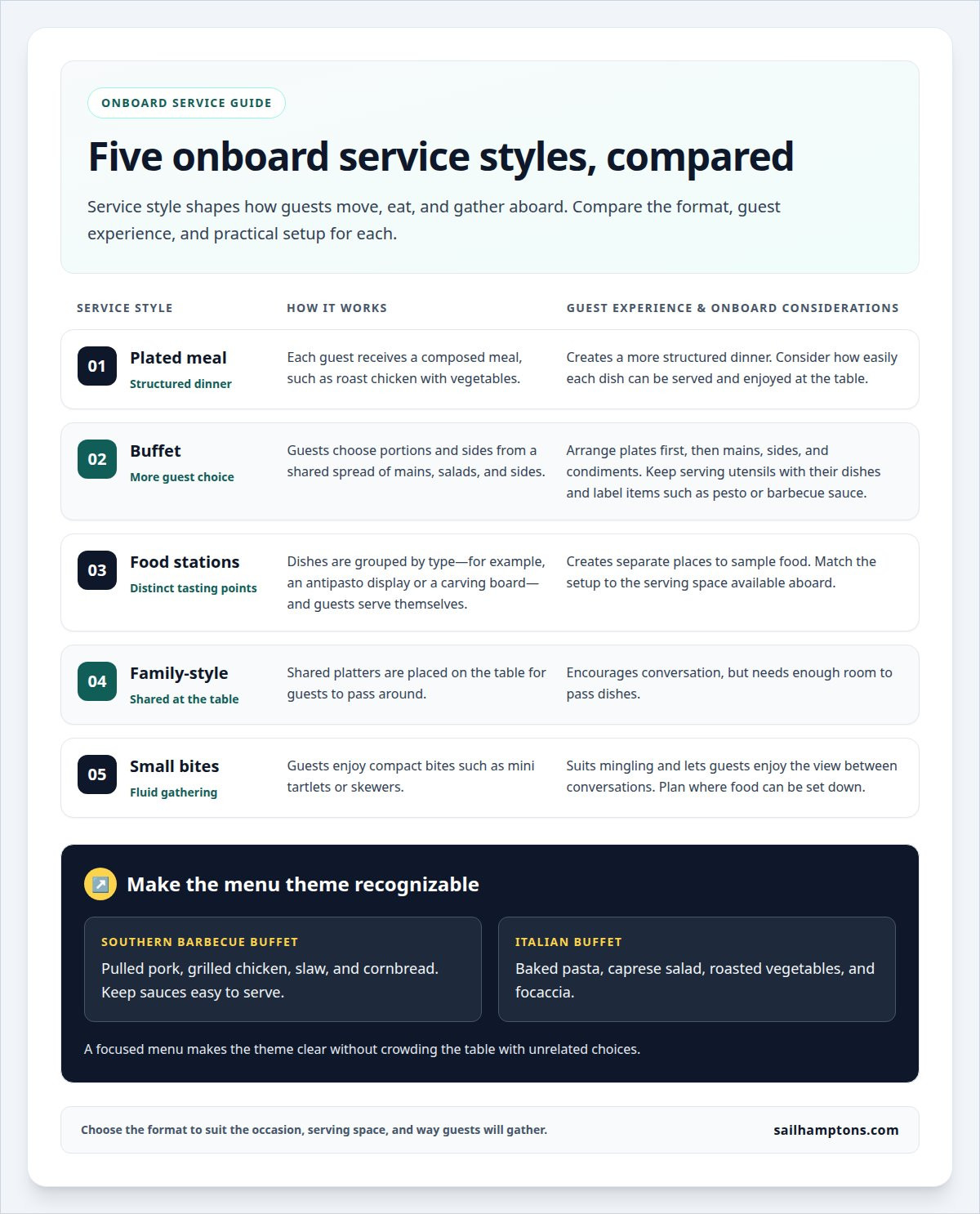
A plated dinner gives each guest a composed meal, such as roast chicken with vegetables, while a buffet lets guests choose portions and sides. For plated service, consider how easily each dish can be served and enjoyed at the table. For a buffet, arrange mains, salads, and sides clearly to keep serving orderly. Either style can feel polished with coordinated presentation.
Station, Family-Style, and Small-Bite Service
Food stations group dishes by type, such as an antipasto display or carving board, and invite guests to serve themselves. Family-style service puts shared platters on the table, encouraging conversation but requiring room to pass dishes. Small bites, including mini tartlets or skewers, suit a more fluid gathering. Match the format to how guests will mingle and where food can be set down.
A themed lunch buffet gives the meal a clear point of view. For a Southern barbecue, consider pulled pork, grilled chicken, slaw, and cornbread. Choose complementary dishes and keep sauces easy to serve. An Italian buffet could pair baked pasta with caprese salad, roasted vegetables, and focaccia. A focused menu makes the theme recognizable without crowding the table with unrelated choices.
For a buffet, arrange plates first, followed by mains, sides, and condiments. Keep serving utensils with their dishes, and label items such as pesto or barbecue sauce. A plated meal suits a structured dinner, while a buffet gives guests more choice. Stations create distinct tasting points, and small bites let guests enjoy the view between conversations.
Cold and hot hors d’oeuvres
Choose bites that are easy to pick up, neatly portioned, and suited to the outing’s pace. A mix of chilled and warm choices adds contrast without requiring full meal service.
Meat and Seafood Bites
For hearty meat hors d’oeuvres, consider small chicken skewers, sliced beef on toast points, or miniature meatballs with a light glaze. Keep portions compact so guests can manage them without balancing a plate. Seafood options might include shrimp cocktail cups, smoked salmon bites, or crab cakes. Contain sauces and serve hot items promptly to preserve their texture and temperature.
Vegetarian Hors d’Oeuvres
Vegetarian bites add color and variety to the tray. Offer caprese skewers with tomato, mozzarella, and basil, cucumber rounds topped with herbed cheese, or vegetable tartlets. A hummus cup with crisp vegetables is a convenient self-contained option. Include substantial choices alongside lighter produce so vegetarian guests have satisfying options, not just garnishes or side dishes.
Easy-to-Eat, Low-Mess Foods
The easiest boat-friendly foods are bite-sized, firm, and served without runny sauces. Try melon and prosciutto on toothpicks, mini quiches, cheese cubes, or pinwheel sandwiches. For a yacht gathering, avoid foods that crumble heavily or require guests to juggle cutlery while standing. Use small trays or napkins, and serve portions in batches to keep the presentation neat.
Accommodate allergies and dietary restrictions with clearly separated choices. For example, set vegetarian bites apart from meat options and identify ingredients such as dairy, nuts, or shellfish. A menu can also include gluten-free options, such as vegetable skewers, without assuming one dish suits every guest.
Dessert hors d’oeuvres can finish the spread neatly: consider chocolate-dipped strawberries, lemon tartlets, or small shortbread cookies. Choose pieces that hold their shape and can be served individually, rather than desserts that need a plate and fork. Pairing a bright fruit bite with a richer chocolate option gives guests a simple finish without turning the deck into a dessert table.
Themed catering menus and service styles
A menu theme gives the meal a distinct character, from a coastal lunch to a relaxed picnic spread. Pair it with a service style that suits the boat’s serving space and the group’s plans.
Compact dishes and simple serving arrangements work well in limited space, while a larger yacht may accommodate more elaborate presentations. For group charters, choose menus that are easy to portion and share, so guests can enjoy the gathering without crowding the serving area.
For safe transport and serving, keep chilled foods chilled and hot dishes hot in suitable insulated carriers. Use covered containers, separate foods with different temperature needs, and serve perishable items promptly instead of leaving them out for extended periods.
A drop-off arrangement provides prepared food for the host to serve; full-service catering can include staff-led setup and serving. Choose based on how much hosting you want to handle and whether the outing has room for staff and serving equipment. A themed favorite, such as a Mediterranean spread, can work with either format.
The number of portions on a tray depends on the dish and whether it’s a first bite, a light snack, or part of a meal. A tray of substantial chicken skewers serves differently from one of small cheese bites. Plan the assortment around the gathering’s length and the other food being served, rather than using the same tray size for every item.
Before booking, settle the menu, delivery or drop-off timing, serving responsibilities, dietary needs, and how food will be kept at the right temperature. Those details help match the food to the vessel and schedule. Explore catering options for a day afloat and shape a menu around your charter plans.
SailHamptons: Yoga on the Water
SailHamptons brings together a serene sailing experience and thoughtful options for time on the water. Choose Yoga on the Water for a restorative outing, or consider Catering and Beverage Add-ons when your plans call for food and drinks alongside the journey. Luna Private Charter and Cosmos Private Charter offer private charter options for guests shaping a gathering around their own plans.
The menu and service decisions in this guide can help you plan a meal that suits the occasion, whether you’re organizing a leisurely private outing or a celebration. For a more tailored experience, bring your preferred menu style and service approach into your charter planning.
Contact SailHamptons to discuss your day on the water.
Make the Day Your Own
Let the occasion shape the final decisions: a quiet escape calls for a different rhythm than a lively gathering with friends. The best catering menus for a day on the water should suit the experience you want, from the welcome aboard to the last view of the shoreline. Choose the atmosphere first, then let the food and service support it without taking focus away from time together.
SailHamptons offers Luna Private Charter, Cosmos Private Charter, and Public Sunset Sail options for different kinds of days afloat. Whether you’re planning a private outing or a sunset sail, a considered menu can make the experience feel distinctly yours. Contact SailHamptons to plan your menu, and take the next step toward a memorable day on the water.
Frequently Asked Questions
What foods are best for catering a boat day or day on the water?
Choose compact foods that hold their shape and are easy to enjoy without a full place setting. Mini frittata squares, stuffed grape leaves, and individual grain-salad cups offer variety beyond standard sandwiches. For a longer outing, pair them with a more substantial entrée and a few lighter bites. Keep sauces separate, and favor sturdy containers that are easy to manage aboard.
How much does boat catering cost per person in the United States?
Boat catering costs vary with the menu, guest count, delivery arrangements, and level of service. A simple prepared-food order differs from a staffed event with setup and serving, so a single general figure may not reflect your plans. The menu’s ingredients and whether the food is a snack or a full meal also affect the estimate. For a tailored cost, request a quote based on those details.
What are typical catering menu options for boat charters and yacht rentals?
Plan the menu around the outing: a light spread for a short sail, a fuller lunch for a midday charter, or passed bites for a social gathering. A casual menu might include a composed salad, savory tart, and fruit platter. For a celebratory sail, add a more substantial main course and a small sweet finish. Match the format to the day’s activities.
How should catering portions be calculated for a day on the water?
Start with the schedule, then count the occasions for serving food: arrival snacks, a meal, or later refreshments. Decide whether each serving is a light bite or the main food offering, and plan portions accordingly. Account for guests who need an alternative dish rather than treating every item as interchangeable. A menu with several small selections should still include enough substantial food for the outing.
What drinks, ice, and hydration options should be included for a boating day?
Make still water the main nonalcoholic option, then add choices such as coconut water, chilled juice, or a lightly flavored beverage. Plan ice for serving drinks and keeping chilled items cold, using separate containers where practical. Consider how beverages will be poured or handed out during the outing. A mix of sealed individual drinks and a shared pitcher can suit different serving styles.