
The quietest stop in Noyac Bay depends as much on timing as on where you anchor. To anchor and swim in a quiet Noyac Bay cove, plan around the tide, current, changing conditions, and other boat traffic instead of relying on one fixed spot or arrival time.
A peaceful swim often starts with a flexible itinerary. Tides and currents affect conditions, while boat traffic can change how secluded a cove feels throughout the day. Leaving room to adjust can turn a rushed pause into an unhurried afternoon on the water.
This guide explains how itinerary flexibility, tides, currents, timing, and boat traffic shape a cove stop in Noyac Bay near Sag Harbor. The goal is a comfortable, well-timed visit, with room to enjoy the water when conditions and the rhythm of the bay come together.
Key Takeaways
- Keep the itinerary flexible so the cove stop can suit changing conditions and the day’s pace.
- Consider how tide and current may affect comfort before settling in for a swim.
- Time your arrival with yacht traffic in mind; an earlier or later stop can feel more peaceful.
- Choose an anchorage based on the conditions at the time, not simply on how secluded it looks.
1. Flexible yacht itineraries
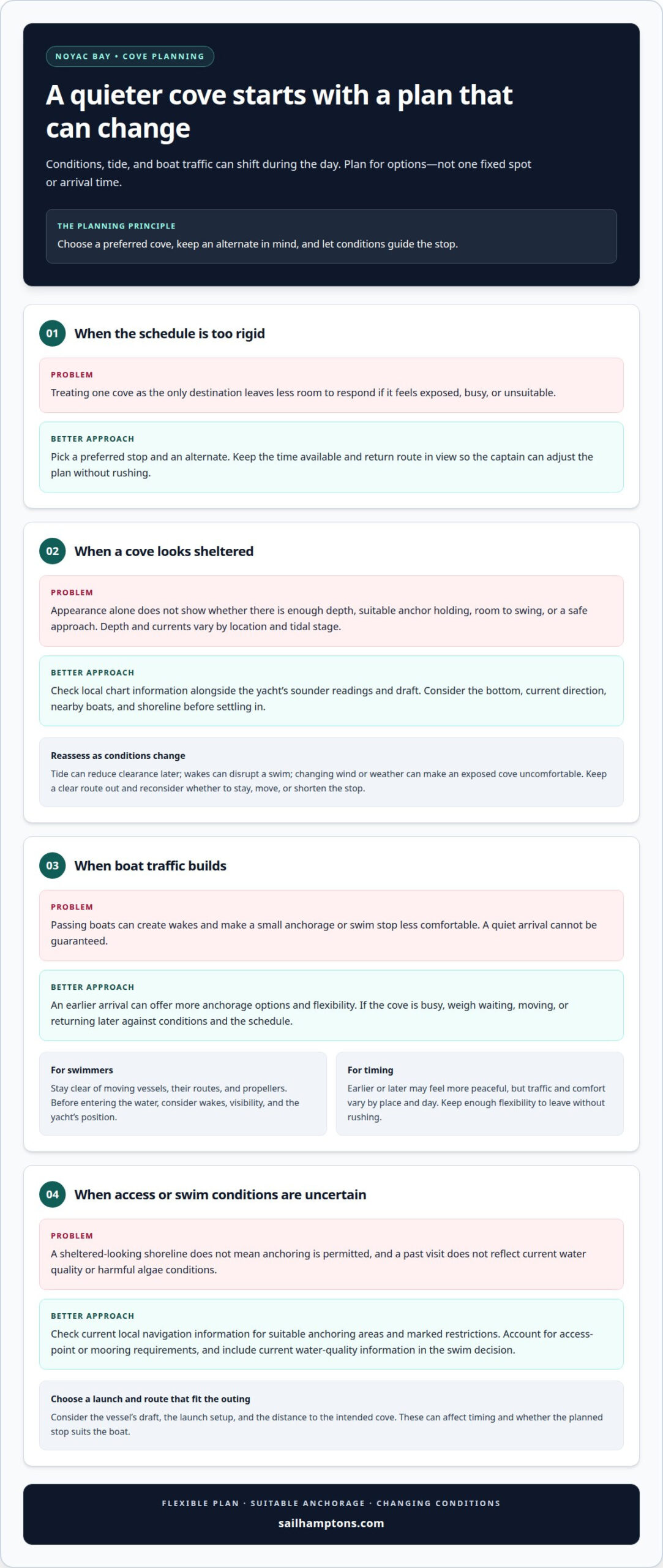
A flexible itinerary lets a Noyac Bay swim stop fit the day. Choose a preferred destination, then let the captain shape the route around conditions, anchoring options, and available time. If the first cove feels exposed or busy, changing the stop can leave more time for a calmer swim. A rigid schedule allows less room to adapt. To anchor and swim in a quiet Noyac Bay cove, make it a preferred option rather than the only destination.
Are there designated anchoring areas or no-anchor zones in Noyac Bay? Use current local navigation information to identify suitable anchoring areas and avoid marked restrictions. A sheltered-looking shoreline alone does not mean anchoring is permitted.
Are permits, fees, or moorings required to anchor or launch a boat in Noyac Bay? Requirements can vary by access point or mooring area, so don’t assume one rule applies throughout the bay. Account for relevant access and mooring requirements when planning the route.
What are the best public access points and launch sites for boats on Noyac Bay? Choose a public launch suited to the vessel and planned route. Consider the boat’s draft, the launch setup, and the distance to the intended cove, which can all affect the outing’s timing.
What are the water quality and harmful algae conditions in Noyac Bay? Include current water quality and harmful algae information in your swim decision. A past visit does not reflect present conditions. Keep the itinerary flexible so the captain can change the swim stop if conditions call for a different plan.
Before setting out, choose a preferred destination, an alternate stop, and the time available for each. This gives the captain practical options without turning a relaxed outing into a rigid timetable. In Noyac Bay, a good itinerary can adapt while keeping the swim, anchorage, and return route in view.
2. Tides and currents
Water depth in a Noyac Bay cove changes with the tide, and bottom composition affects anchor holding. Currents also vary by location and tidal stage, so a sheltered-looking shoreline doesn’t tell the whole story. The captain considers charted depths, sounder readings, and conditions at the intended anchorage before settling in.
What are the water depths, bottom conditions, and tidal currents in Noyac Bay coves? They vary by cove and change with the tide. Depth and bottom type affect anchor holding, while current affects how the yacht lies. Use local chart information alongside the vessel’s sounder readings to assess a potential spot.
At a potential anchorage, compare the displayed depth with the space available around the yacht. Suitable holding matters as much as sufficient water depth. If the current runs across the anchoring direction, the yacht may swing differently than expected, so leave room from nearby boats and shore.
What hazards should boaters watch for in Noyac Bay, including shoals, wakes, and weather? Watch for shallow areas that limit clearance, wakes that disrupt a swim stop, and changing wind or weather that can make an exposed cove uncomfortable. Keep a clear route out, and reassess conditions before swimming or weighing anchor.
Timing helps manage these factors. A cove with comfortable depth earlier in the tide may have less clearance later. A changing breeze can also affect the yacht’s position and the feel of the water. The captain can decide whether to stay, move to a more suitable anchorage, or shorten the stop.
For a water-based experience without making anchoring the focus, Yoga on the Water offers another way to enjoy the bay. Either way, tide, holding, and weather shape how relaxed a stop feels.
The main channels of Queen Charlotte and Pelorus Sounds can develop short, steep chop when wind opposes tide. Arriving at Roscoe Bay in the early afternoon is popular when it coincides with high tide.
3. Timing and yacht traffic
Arriving early gives the captain more anchorage options, depending on conditions and available moorings. A morning arrival also leaves more flexibility to adjust the route if the first cove feels exposed or crowded. Keep an alternate destination in mind instead of aiming for one exact spot.
What are the current boating and anchoring regulations for Noyac Bay, Southampton, New York? Follow posted restrictions and navigation markers, and don’t assume a quiet shoreline is an authorized anchorage. Rules depend on the specific location and activity, so plan around designated access and anchoring information for your route.
Boat traffic can change a cove’s character throughout the day. Passing boats create wakes that may interrupt a swim or make a small anchorage less comfortable. The captain can reassess the stop as vessels pass and move to another suitable location if traffic builds.
Is swimming safe near anchored boats in Noyac Bay, and where are swimming areas? Keep swimmers away from moving vessels, their routes, and propellers, and choose a suitable area clear of active boat traffic. Before anyone enters the water, the captain should consider wakes, visibility, and the yacht’s position.
Timing can help you find a quieter pause, but it cannot guarantee an empty cove. If the destination is busy on arrival, the captain can weigh waiting, moving, or returning later against conditions and the schedule. Some bays may be calmer near sunset, but traffic and comfort vary by place and day. Keep the return route in view: a peaceful swim stop works best when the yacht can leave without rushing or threading through clustered boats. A flexible departure, an alternate anchorage, and room to adjust make it easier to respond to changing traffic and enjoy the outing.
4. Where are quiet coves in Noyac Bay suitable for anchoring and swimming?
In Noyac Bay, choose a cove based on its anchoring conditions, not its appearance from shore. Locate the intended spot on the chart, then compare its depth and approach with the yacht’s draft. A visually sheltered pocket may still lack sufficient depth, room to swing, or suitable holding.
When assessing a potential cove in Southampton, consider three things together: a safe approach, room to anchor, and separation from moving boat traffic. The captain can use charts and depth readings to judge whether the yacht can settle without crowding nearby vessels or the shoreline. If a spot doesn’t suit the boat, choose another rather than forcing the stop.
Swimming suitability depends on the anchorage and the water. Before anyone enters, the captain considers the yacht’s position, nearby vessel movement, wakes, visibility, and weather. Keep swimmers close enough for supervision but clear of the yacht’s moving gear and passing boats. A suitable cove should offer a calm swim area and a clear route for vessels to pass.
For example, a cove with limited maneuvering room may call for a different anchoring position for a larger yacht than for a smaller boat. If wakes reach the swim area, moving to a suitable sheltered spot may improve comfort. Reassess after anchoring, too: wind or traffic can shift, changing the yacht’s position and whether the water remains inviting.
Use this sequence for a Noyac Bay stop: identify a candidate cove, assess depth and holding, allow room around the yacht, then evaluate the swim area and passing traffic. The right place is the one that fits the vessel and conditions on the day, not simply the cove with the most secluded view. To make a cove-focused outing part of a tailored day on the water, plan a private sailing charter.
Look for a sheltered cove in Southampton with sufficient depth and holding for the yacht, room to maneuver, and separation from passing boats. The swim area should be calm, supervised, and clear of wakes and the yacht’s moving gear.
SailHamptons
SailHamptons offers private yacht charters for guests who want a day on the water shaped around their preferred pace and destinations. If you’re planning a Noyac Bay outing, a private charter is a natural fit for discussing a cove-focused itinerary that accounts for changing conditions and the day’s timing. Luna Private Charter, Cosmos Private Charter, and Blue Sky Private Charter offer distinct ways to experience the water aboard a private yacht.
For a shared sailing experience, the Public Sunset Sail offers a different way to enjoy the bay as daylight softens. The right choice depends on whether you want a private outing or a public sail, and how you’d like the day to unfold.
Contact SailHamptons to talk about your plans for time on the water.
Make Your Next Day on the Bay Your Own
A day on Noyac Bay can be shaped around the memory you want to take home: a peaceful pause in a sheltered cove, an unhurried swim, or the changing light across the water. Let that feeling guide your plans while leaving room for the day to unfold naturally.
If you’re ready to anchor and swim in a quiet Noyac Bay cove, start with the experience you have in mind and the people you’ll share it with. SailHamptons can help plan a private outing or shared sail from Sag Harbor. Its USCG-certified, fully insured vessels are operated by professionally trained crews, with capacity limits observed. Contact SailHamptons to discuss an itinerary that fits your plans, from open water to the return to shore.
Start planning your time on the water and look forward to a day that feels distinctly yours.
Frequently Asked Questions
What’s The Sailing Actually Like?
Sailing from Sag Harbor with SailHamptons is crew-led, leaving you free to enjoy the breeze, shoreline views, and movement under sail. The mood can feel leisurely or lively as wind and route shape the passage. All SailHamptons charters booked for more than six-passengers are held aboard US Coast Guard Inspected ‘Small Passenger Vessels’ that are certified for capacity and always provided with professional trained crew. Every SailHamptons vessel is always fully-insured for its full capacity.
How busy is Noyac Bay during summer weekends, and when are coves quietest?
Summer weekend traffic varies across Noyac Bay, so a cove’s feel depends on the time and location. An early arrival gives the captain more anchorage options, depending on conditions and available moorings. A bay busy in the afternoon may grow calmer toward sunset. Keep timing flexible, allowing the captain to consider available space and conditions rather than relying on one cove to stay quiet all day.